After the Burn

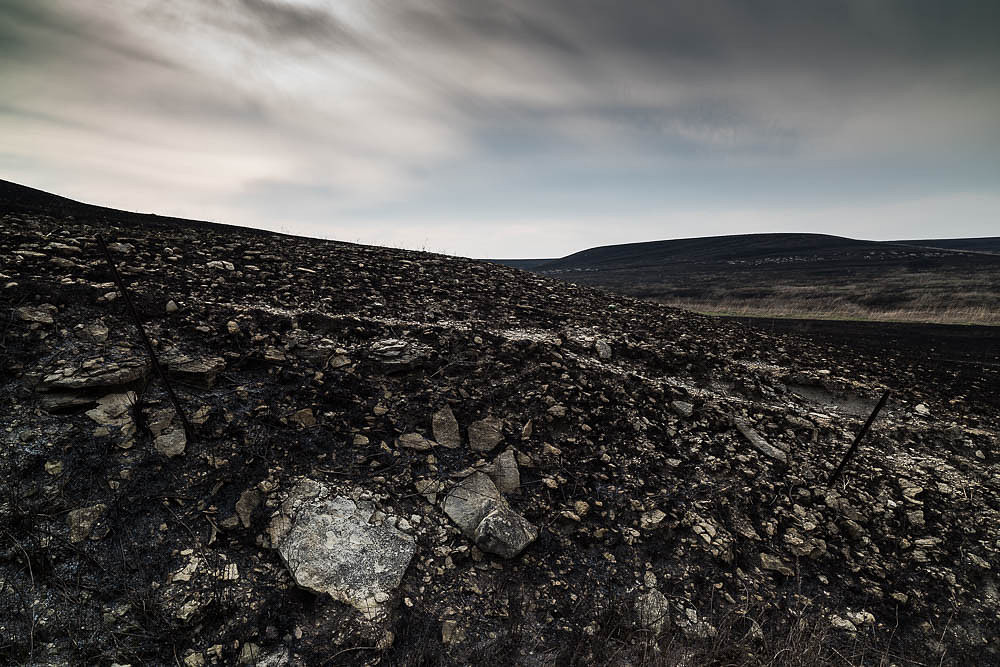 Seirer_170407_3910.jpgAfter the Burn Blackened by fire, a tallgrasss prairie west of Matfield Green, Kan., prepares for regrowth and another season of cattle grazing. Fire is a friend of the prairie ecosystem, clearing grassland of previous growth and halting what could be an invasion of woody plants Although this ground looks well charred, the root systems of prairie grasses are extensive and robust. Within days, new green shoots will appear and thrive -- and the new growth is particularly attractive to the cattle that will graze here. Note that the fire, consuming the topside vegetation, has exposed the cherty gravel, or flint, that is the primary characteristic of the Flint Hills. Once, the Great Plains contained more than 170 million acres of tallgrass prairie. Nearly all of it has been plowed into farmland, with less than 4 percent still standing. Most of that is in the Kansas Flint Hills. It was the cherty gravel that spared this piece of a once vast ecosystem from the plow.
Blackened by fire, a tallgrasss prairie west of Matfield Green, Kan., prepares for regrowth and another season of cattle grazing. Fire is a friend of the prairie ecosystem, clearing grassland of previous growth and halting what could be an invasion of woody plants. Although this ground looks well charred, the root systems of prairie grasses are extensive and robust. Within days, new green shoots will appear and thrive — and the new growth is particularly attractive to cattle that will be brought here to graze. Note that the fire, consuming the topside vegetation, has exposed the cherty gravel, or flint, that is the primary characteristic of the Flint Hills. Once, the Great Plains contained more than 170 million acres of grassland. Fire then was part of the natural cycle of the ecosystem. Lightning was a common trigger, although Indians were known to start prairie fires, too, knowing that the regrowth would attract the bison herds. Nearly all of the virgin prairie has been plowed into farmland, with less than 4 percent remaining. Most of that is in the Kansas Flint Hills. Credit the cherty gravel for that. Its abundance is what spared the Flint Hills from the plow.
|
January
(2)
February (2)
(9)
March (9)
(17)
April (17)
(13)
May (13)
(9)
June (9)
(9)
July (9)
(13)
August (13)
(4)
September (4)
(6)
October (6)
(7)
November (7)
(2)
December (2)
|
(3)
January (3)
(4)
February (4)
(2)
March (2)
(11)
April (11)
(13)
May (13)
June
July
(5)
August (5)
(7)
September (7)
(7)
October (7)
(12)
November (12)
(4)
December (4)
|
(2)
January (2)
(6)
February (6)
(9)
March (9)
(6)
April (6)
(5)
May (5)
(6)
June (6)
(5)
July (5)
August
(1)
September (1)
(2)
October (2)
(3)
November (3)
December
|
January
(3)
February (3)
March
April
(2)
May (2)
June
July
August
September
October
November
December
|
January
February
March
April
May
June
July
August
September
October
November
December
|
January
February
March
April
May
June
July
August
September
October
November
December
|
January
February
March
April
May
June
July
August
September
October
November
December
|
January
February
March
April
May
June
July
August
September
October
November
December
|
January
February
March
April
May
June
July
August
September
October
November
December
|
January
February
March
April
May
June
July
August
September
October
November
December
|