Together Again

 Seirer_170603_3184.jpgTogether Again Although they have a large tallgrass prairie to roam, these cattle are bunched tightly in a low and muddy portion of their pasture, likely seeking relief from a persistent nemesis — heel flies. Adult female heel flies glue their eggs on the hair of host animals, and their preference is the hind legs of cattle. When the larvae emerge a few days later they burrow to the base of the hair, penetrate the skin of their host, open a breathing hole in the skin, and settle in for nearly a year as a parasite. Come next spring, they’ll burrow back to the skin, and plop to the ground where they pupate as an adult fly. This process is a serious irritant for cattle. They bunch together to seek refuge from the insects and sometimes find water to stand in to protect their legs. Their distress subsequently can be reflected in significant economic loss to ranchers. Those losses include reduced weight gain, hide damage and damage to tissue (meat) that leads to lower prices at the packing plant. Insecticides can provide relief to both the animals and ranchers. This herd, west of Alma in Wabaunsee County, includes many calves just a few days old. But they aren’t part of the bunching. They’ve drifted to the periphery to keep from being trampled. g
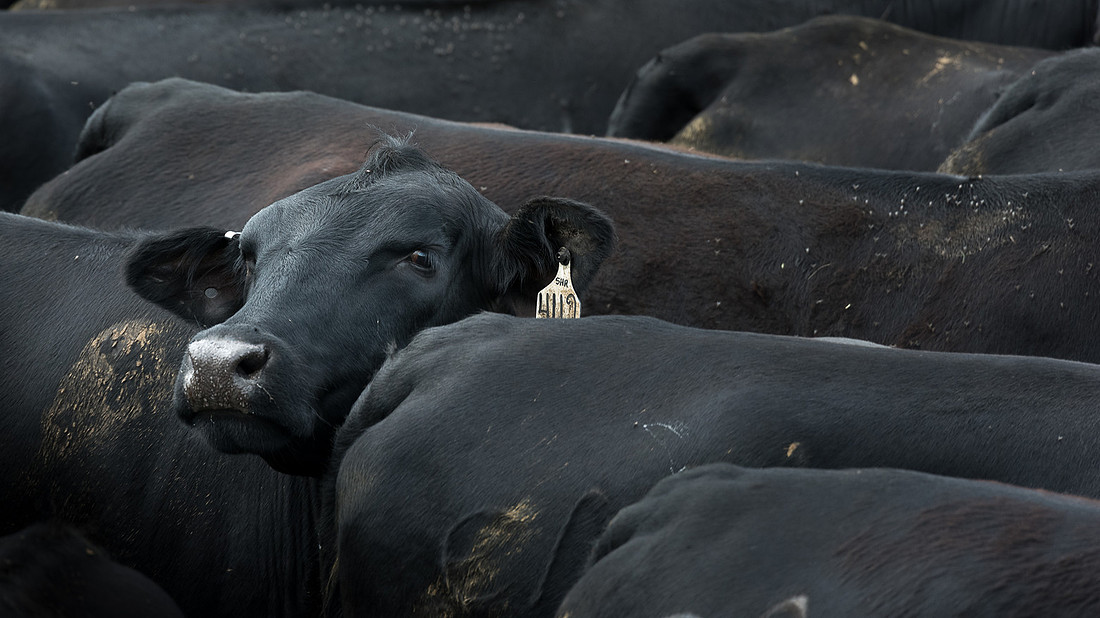
Although they have a large tallgrass prairie to roam, these cattle are bunched tightly in a low and muddy portion of their pasture, likely seeking relief from a persistent nemesis — heel flies. Adult female heel flies glue their eggs on the hair of host animals, and their preference is the hind legs of cattle. When the larvae emerge a few days later they burrow to the base of the hair, penetrate the skin of their host, open a breathing hole in the skin, and settle in for nearly a year as a parasite. Come next spring, they’ll burrow back to the skin, and plop to the ground where they pupate as an adult fly.
This process is a serious irritant for cattle. They bunch together to seek refuge from the insects and sometimes find water to stand in to protect their legs. Their distress subsequently can be reflected in significant economic loss to ranchers. Those losses include reduced weight gain, hide damage and damage to tissue (meat) that leads to lower prices at the packing plant. Insecticides can provide relief to both the animals and ranchers.
This herd, west of Alma in Wabaunsee County, includes many calves just a few days old. But they aren’t part of the bunching. They’ve drifted to the periphery to keep from being trampled.
|
January
(2)
February (2)
(9)
March (9)
(17)
April (17)
(13)
May (13)
(9)
June (9)
(9)
July (9)
(13)
August (13)
(4)
September (4)
(6)
October (6)
(7)
November (7)
(2)
December (2)
|
(3)
January (3)
(4)
February (4)
(2)
March (2)
(11)
April (11)
(13)
May (13)
June
July
(5)
August (5)
(7)
September (7)
(7)
October (7)
(12)
November (12)
(4)
December (4)
|
(2)
January (2)
(6)
February (6)
(9)
March (9)
(6)
April (6)
(5)
May (5)
(6)
June (6)
(5)
July (5)
August
(1)
September (1)
(2)
October (2)
(3)
November (3)
December
|
January
(3)
February (3)
March
April
(2)
May (2)
June
July
August
September
October
November
December
|
January
February
March
April
May
June
July
August
September
October
November
December
|
January
February
March
April
May
June
July
August
September
October
November
December
|
January
February
March
April
May
June
July
August
September
October
November
December
|
January
February
March
April
May
June
July
August
September
October
November
December
|
January
February
March
April
May
June
July
August
September
October
November
December
|
January
February
March
April
May
June
July
August
September
October
November
December
|