Cattle Feed at the Ready
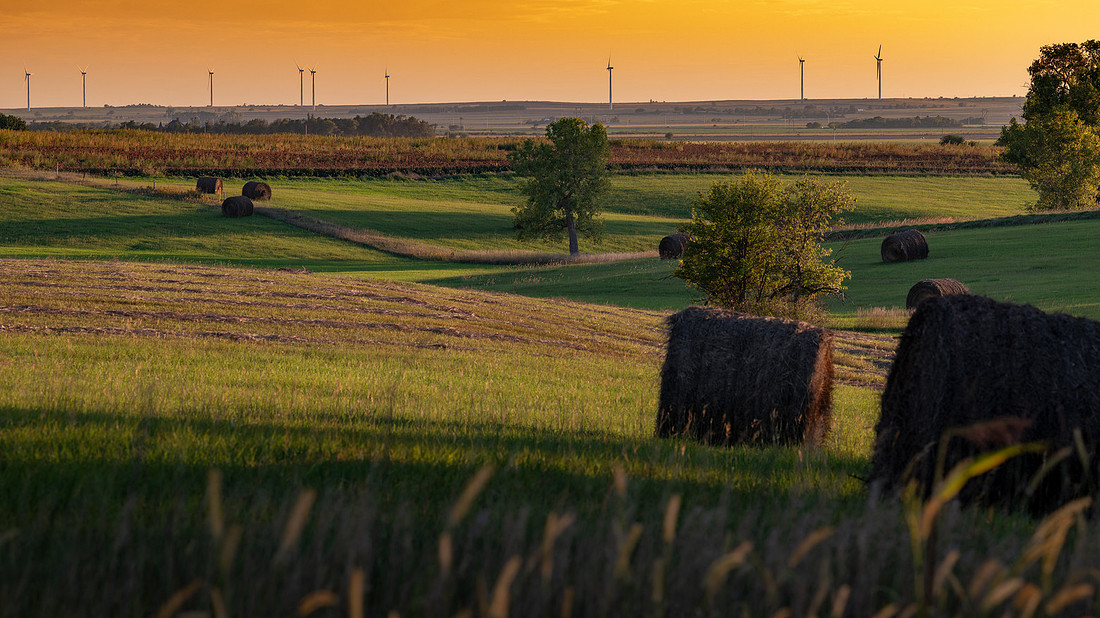

Large round bales of hay dot a cut field in southern Lincoln County. On the horizon are wind turbines, generating electricity.
Field Work

Working in the last light of day, a Lincoln County farmer chisels his field in preparation for planting.
Hay Rake
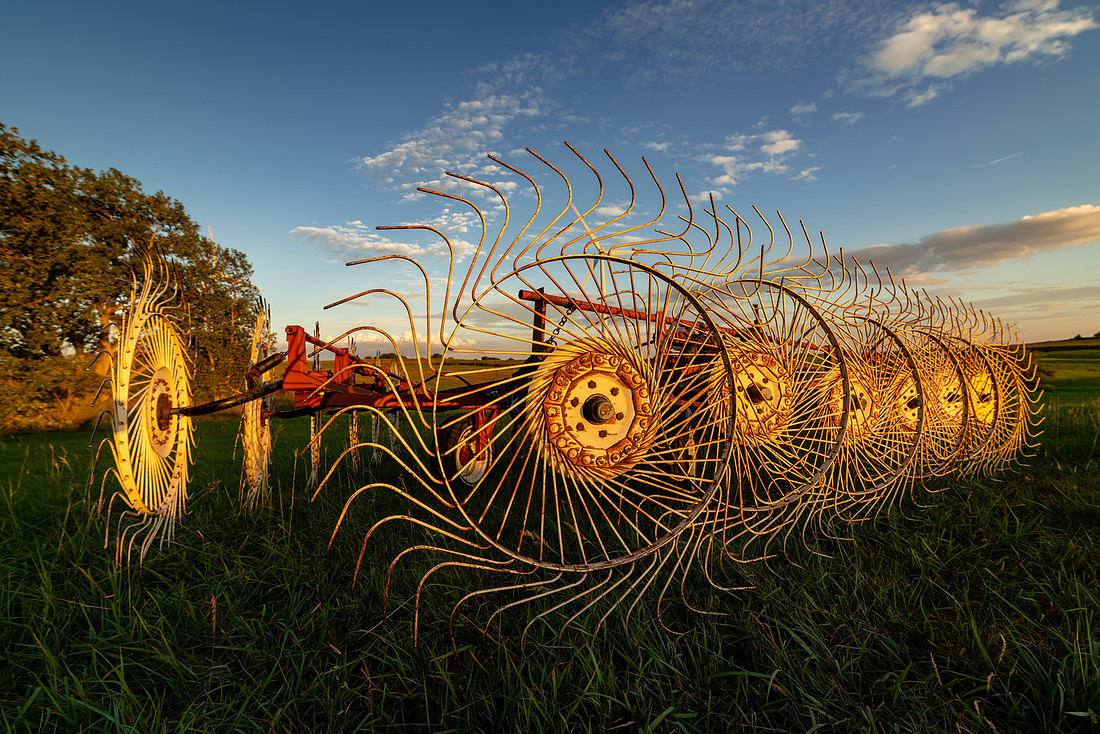
A hay rake, stored in a Lincoln County field east of Lake Wilson, awaits work.
Up and Out

A great blue heron takes flight from a natural waterway that has cut itself into a Flint Hills pasture in Greenwood County.
Good Fences Make ...

Left untended, a rock fence in Chase County is morphing into piles of stone. Before barbed wire became ubiquitous in the late 1800s, limestone was a popular material in the Flint Hills for building everything from homes and barns to fences.
Dinner Table With Flowers

Cattle graze in a pasture studded with bright yellow wild sunflowes, which go uneaten. The pasture is east of Lake Wilson in Lincoln County.
Waves of Grass
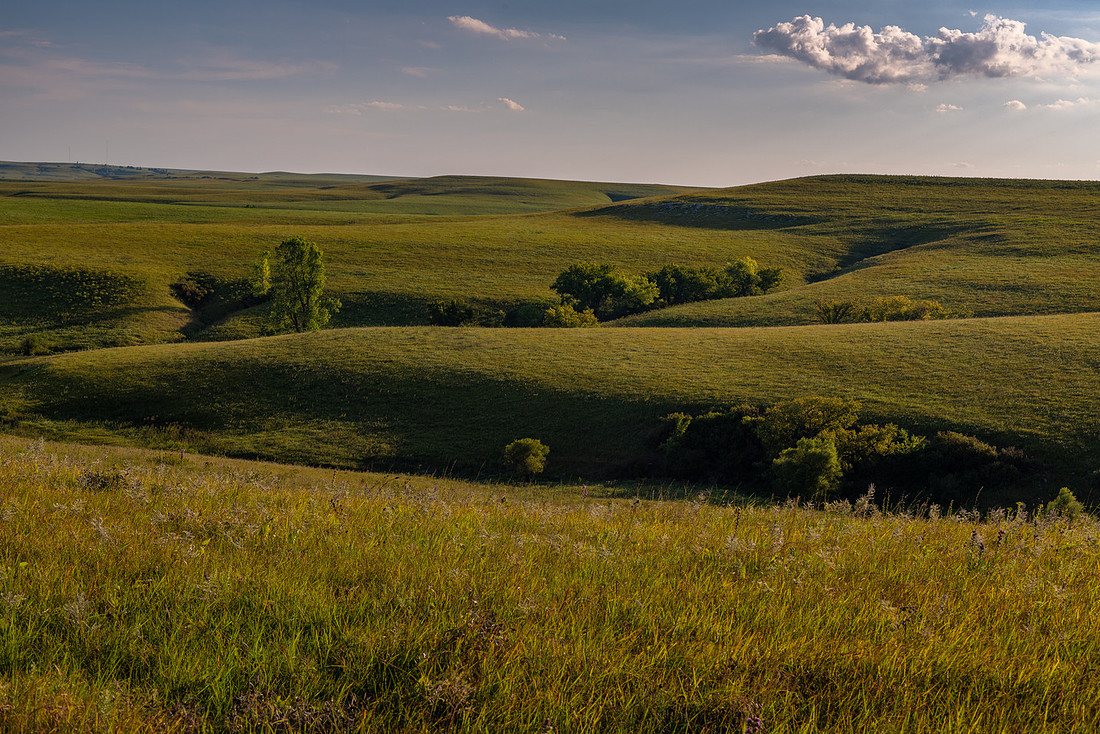
Rolling hills of tallgrass prairie, lush from recent rains, are bathed in the warm light of a setting sun. This scene is near Texaco Hill in the far southeast corner of Chase County.
Kansas Waterfall

Water cascades over a rock cliff at the Geary County State Lake, south of Junction City. The flow over the 35-foot waterfall, just below the lake dam, varies greatly. Heavy rains, typically in the spring, can produce vast quantities of fast-moving water, but in a dry summer no water at all might kiss the rocks. This year, August rains have kept the falls flowing, though the volume is middling.
The Tomb
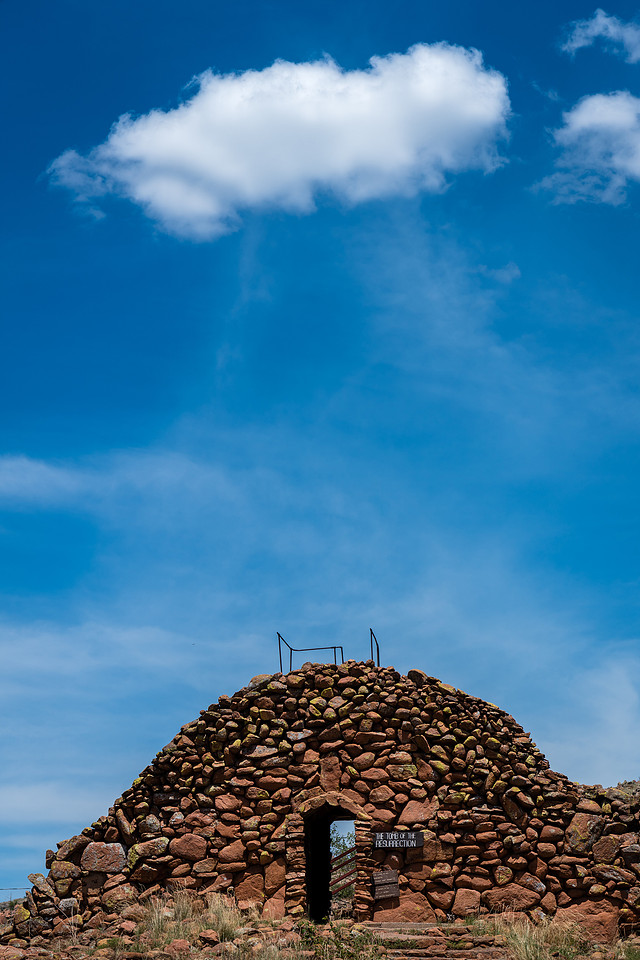
The Tomb of the Resurrection is an interpretation of the tomb where Jesus was laid, made of sandstone rocks at the Holy City of the Wichitas in southwest Oklahoma. The project, in the Wichita Mountains, was the brainchild of the Rev. Anthony Mark Wallock, who started an Easter pageant in 1926 to tell the story of Jesus. In the 1930s the federal Works Progress Administration built a set for his story, including this tomb, a chapel and several other buildings on the 66-acre site. The Holy City, Wallock's vision of the Holy Land, today is open to visitors, many of whom no doubt are drawn to the neighborhood by the adjacent national Wichita Mountains Wildlife Refuge. And the pageant? Still going, and always on Easter Sunday.
A Prairie Scene

Giant granite boulders, known in a geological timetable to slide, line the flanks of Mount Scott in the Wichita Mountains of southwest Oklahoma. An ancient geological unheaval created the mountains, which rise abruptly and surprisingly from the prairie floor. The peaks are high by Oklahoma standards. Mount Scott is 2,464 feet above sea level, and its summit offers a commanding view of the federal Wichita Mountains Wildlife Refuge. The 59,000-acre refuge, managed by the U.S. Fish and Wildlife Service, features mixed-grass prairie and lakes. It is home to bison, elk, turkeys, prairie dogs, river otters and burrowing owls.
Nourishment
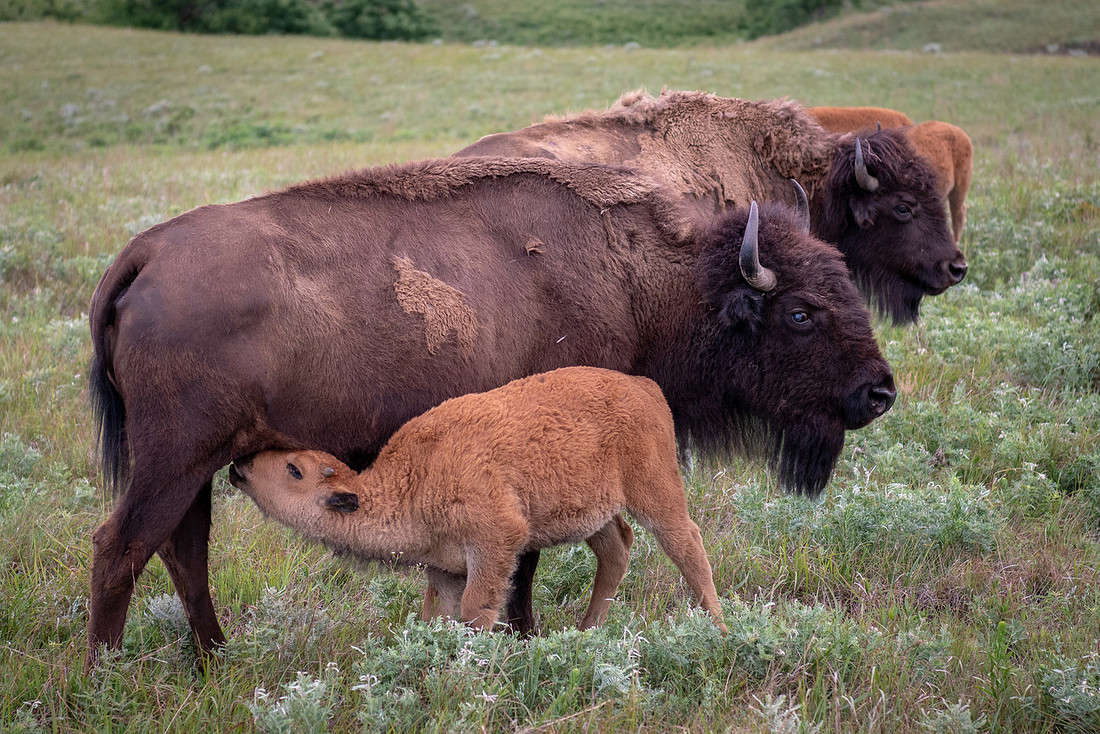
A bison calf samples its mother's milk at the Maxwell Wildlife Refuge near McPherson. The refuge, managed by the state, includes a herd of about 200 bison. The yearly calving season produces an excess of animals that are sold in the fall, with the proceeds paying most of the operational costs of the refuge. Female bison produce a rich milk but their udders, compared with cattle, are quite small, an evolutionary development that helps them run.
School is Open
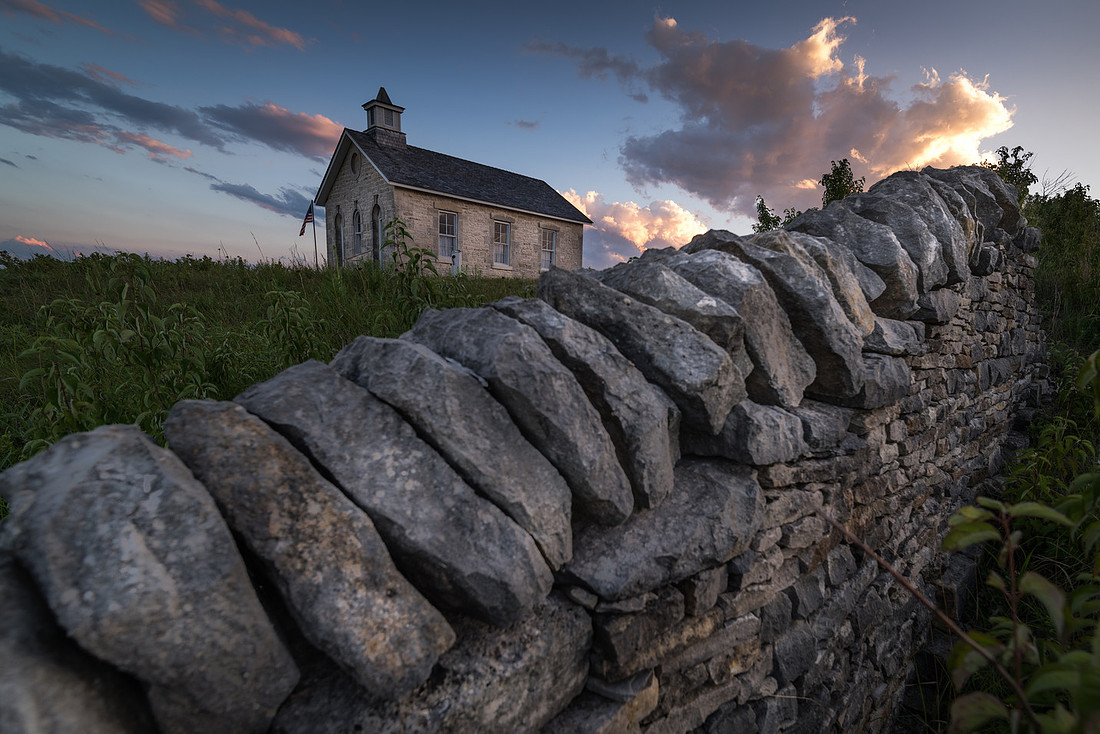
The Lower Fox Creek School sits amidst tall grass and behind a rock wall at the Tallgrass Prairie National Preserve in Chase County. The one-room school was built in 1882 and was in use until its closing in 1930. As part of the preserve it is furnished and open to visitors.