Grass, With Stone
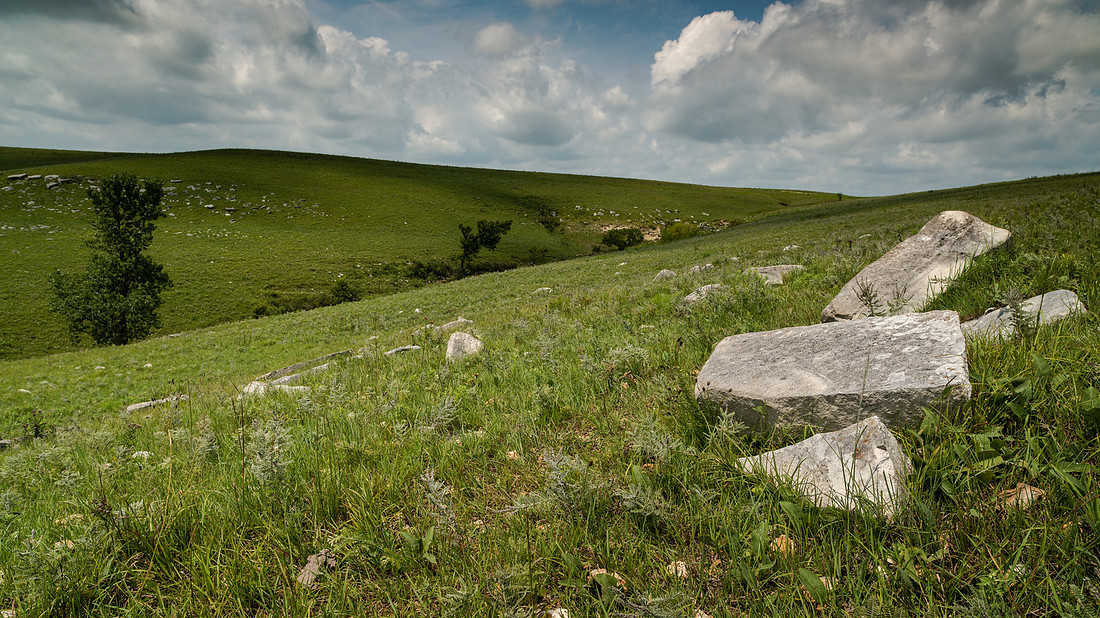

Exposed stone and lush grass are hallmarks of the Kansas Flint Hills. This scene is along Madison Road southeast of Matfield Green.
Intruder Examined
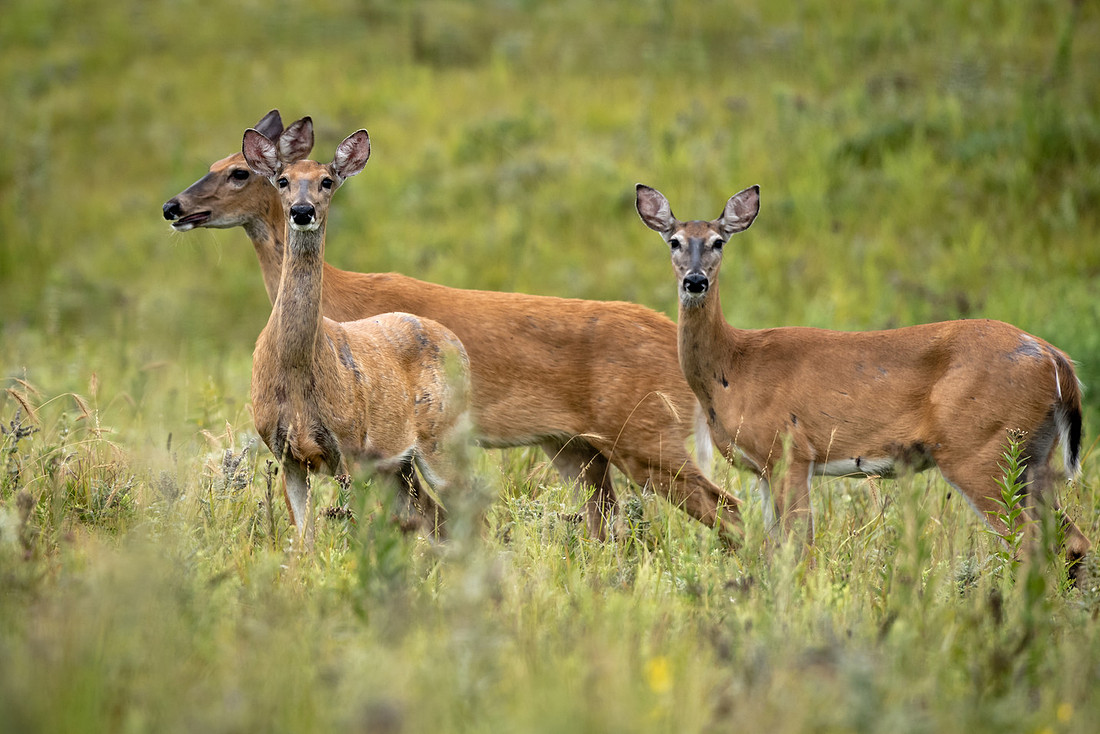
A trio of deer, at home in the tallgrass prairie of the Flint Hills, checks out a photographer in northeastern Butler County. Their curiosity was fleeting, however, and they quickly fled.
Home On The Range
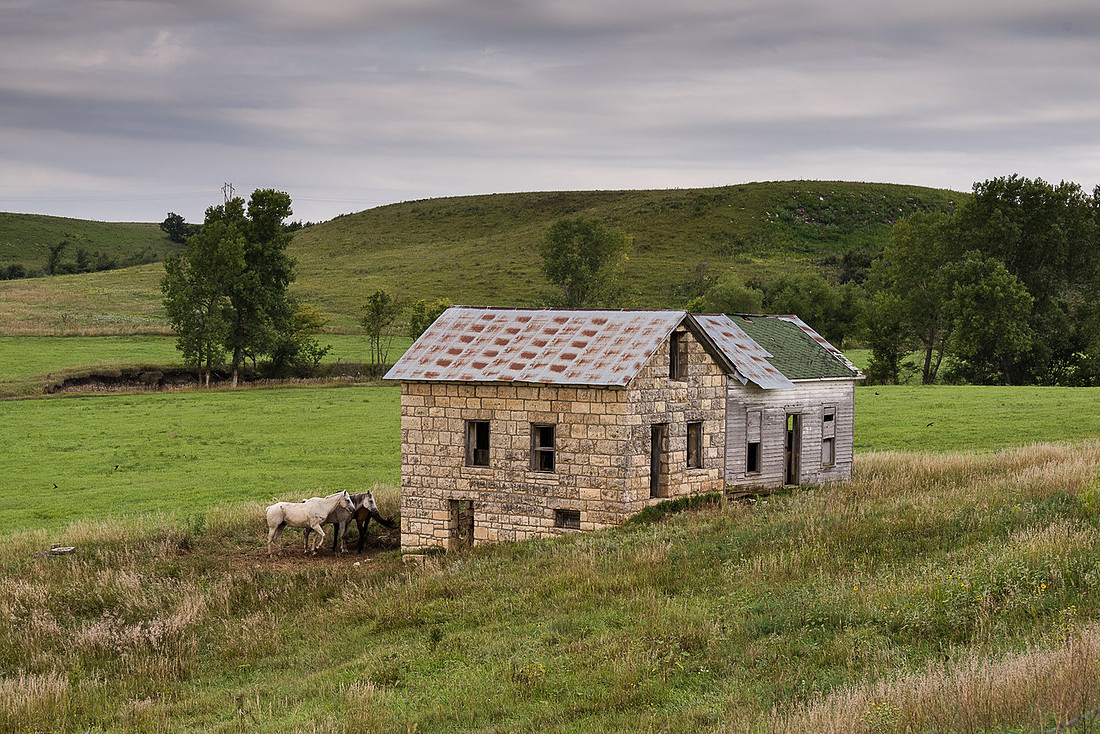
Horses today are making themselves at home in the lower level of a home long ago abandoned by people. The structure is tucked into a hillside on Moyer Ranch Road in northern Geary County.
Salsa Stump Speech
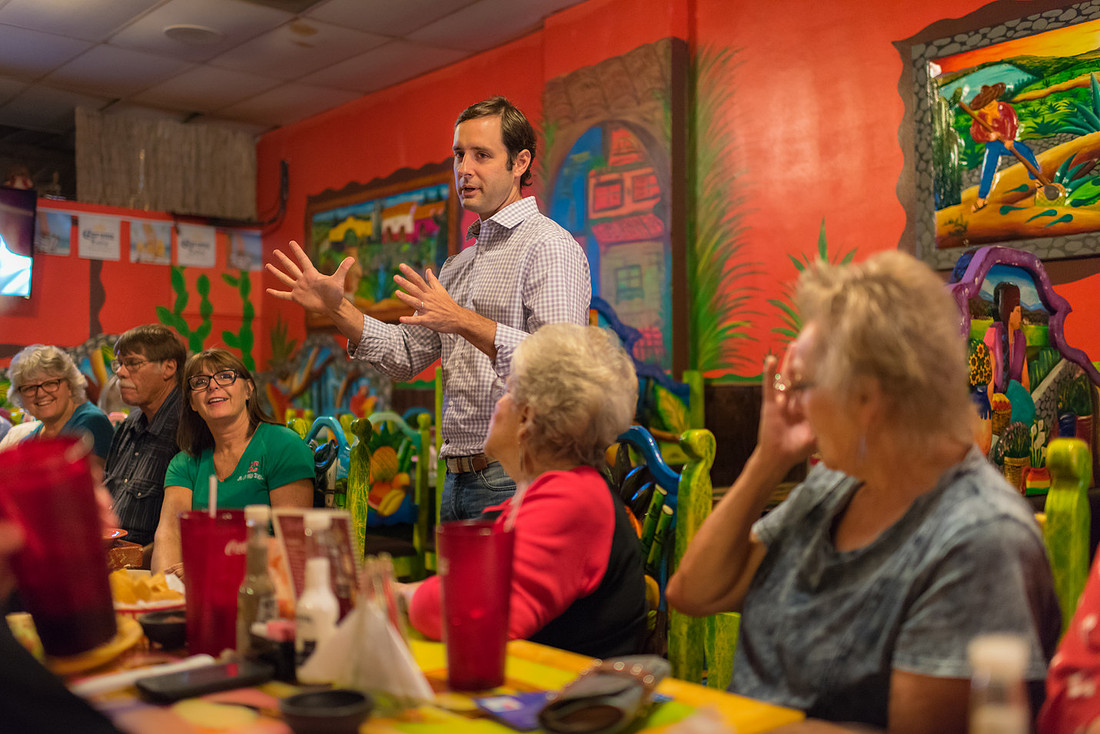
Candidate Josh Svaty makes his pitch for the governor's race to a long table of diners he found waiting for him at the colorful Las Canteras Mexican Restaurant in downtown Smith Center. Svaty, a Democrat and farmer from Ellsworth, was in the northern Kansas community as part of a mission to visit all 105 Kansas counties as he opens his 2018 gubernatorial campaign.
Yucca Territory
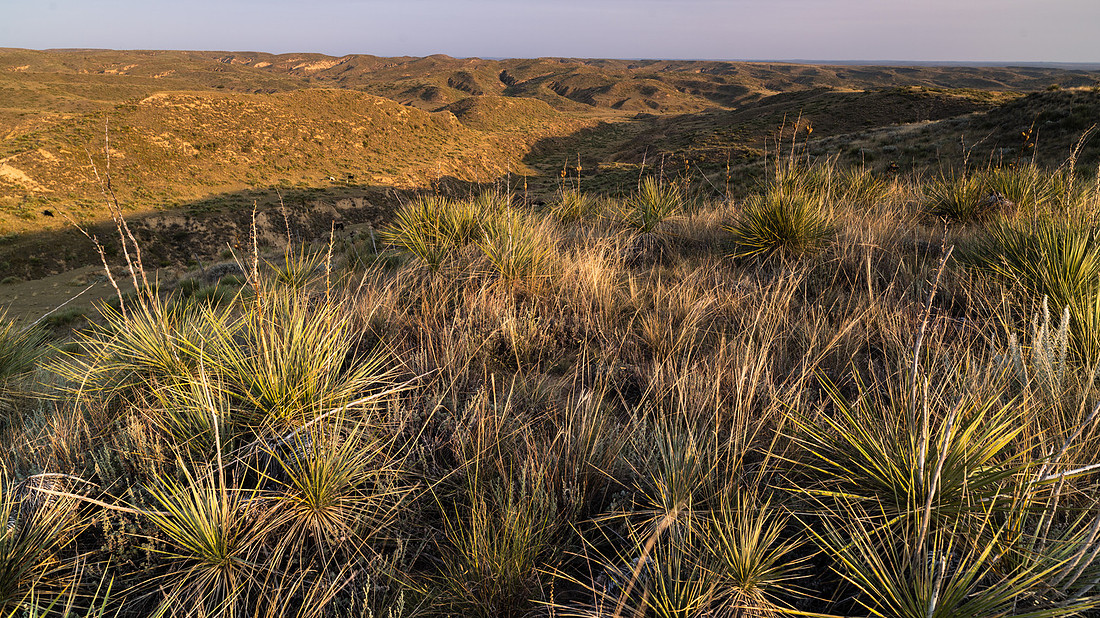
Yucca plants, bearing many stiff spines with sharp points, are plentiful in the shortgrass prairie of the Arikaree Breaks of northern Cheyenne County, Kan. The plants, also known as soap weed, have a horizontal root system that can extend some 30 feet.
Flowers Flag the Breaks
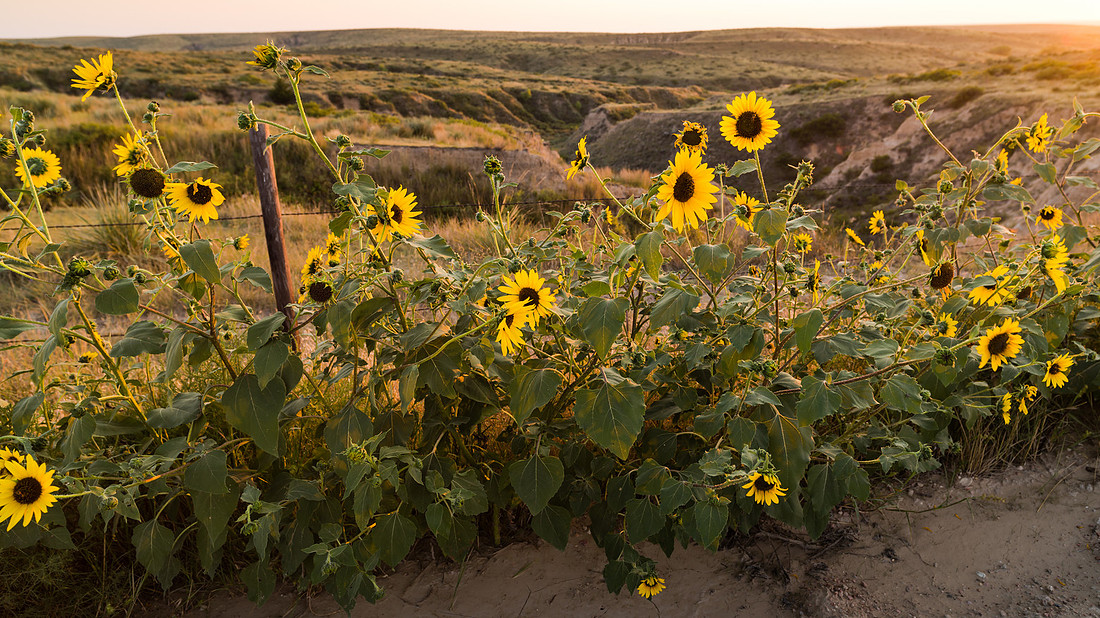
Wild sunflowers line a fence line in the Arikaree Breaks of northwest Cheyenne County. The rugged Breaks were created some 9,000 years ago when wind sculpted the sand, silt and clay particles called loess. Over time, erosion has created ravines and gullies deep enough to deter road construction. A rancher in this area northwest of St. Francis said the best way to explore the inner mysteries of the Breaks is by horse.
Thieves Have Gone
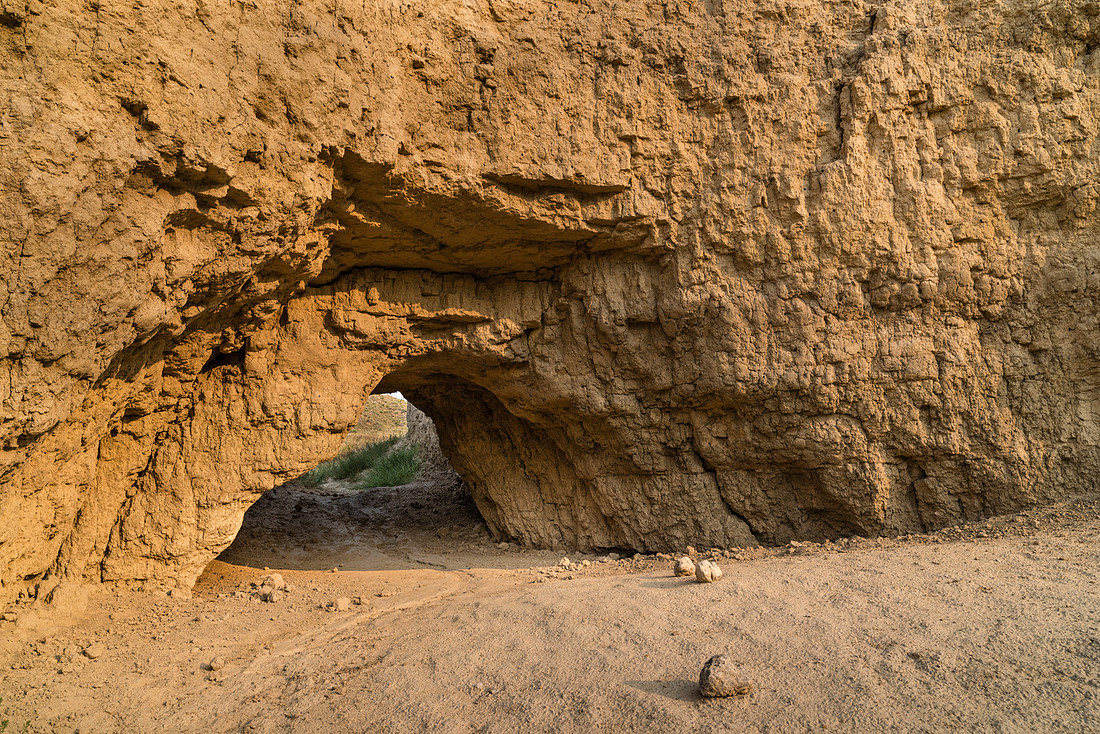
At one time, Horse Thief Cave in northern Cheyenne County, Kan., was a large cave with two chambers. It got its name from its use, but local historians say it was last used by thieves in 1878. The back chamber has fallen in, and only the entrance survives today. Nonetheless, it is a busy tourist attraction. A guest book, housed in a mailbox along Road 17, shows a steady stream of visitors from all corners of the United States who have braved the soft roads to take a look.
Coffee Time in St. Francis
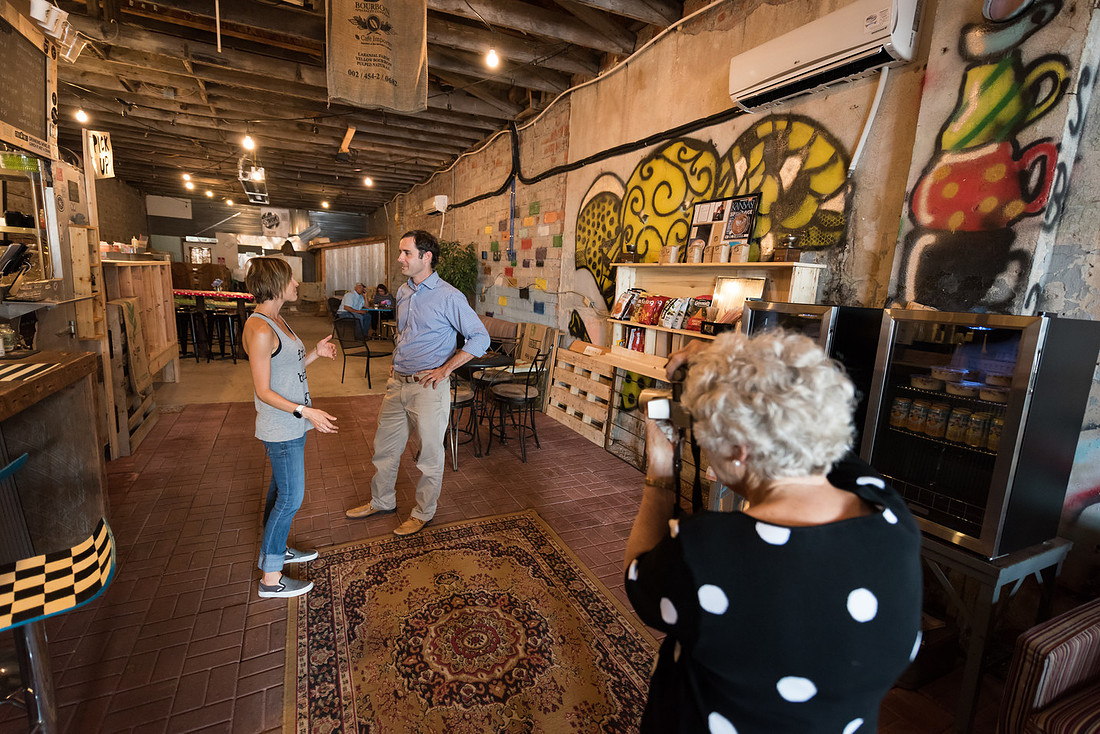
Karen Krien, editor and publisher of the Saint Francis Herald, takes a photo of gubernatorial candidate Josh Svaty visiting with Heidi Plumb, the owner of the Fresh Seven Coffee shop in downtown St. Francis. Svaty, who is at about the half-way point of a campaign swing that will take him to all 105 Kansas counties by October, declared that the sandwich and coffee found here is the best he’s found on the campaign trail. Little wonder. This is a serious shop. Plumb roasts her own coffee beans, and sandwiches at the Fresh Seven are made to order with locally grown, organic vegetables. Vegetarian fare is offered. Words such as “sustainability” flow from her lips. Plumb came to Cheyenne County, in the far northwest corner of Kansas with a population of about 2,600, from Phoenix, following her husband who is a native of this area. She took charge of a downtown storefront in sad shape and applied a bit of renovation to turn it into a coffee bar that is colorful, homey, laid back and a bit funky. On this day her mother, from Phoenix, was on a ladder adding yet more bright paint to the interior brick walls. Plumb’s staff includes a sandwich maker who migrated here from Lawrence and also works part-time on a sheep ranch. Svaty, a farmer and Democrat from Ellsworth seeking the governor’s office in next year’s election, found Fresh Seven a delightful place to dine and campaign. It was at about this point in the day when his long northwest campaign swing began to veer a bit off schedule.
In Bloom
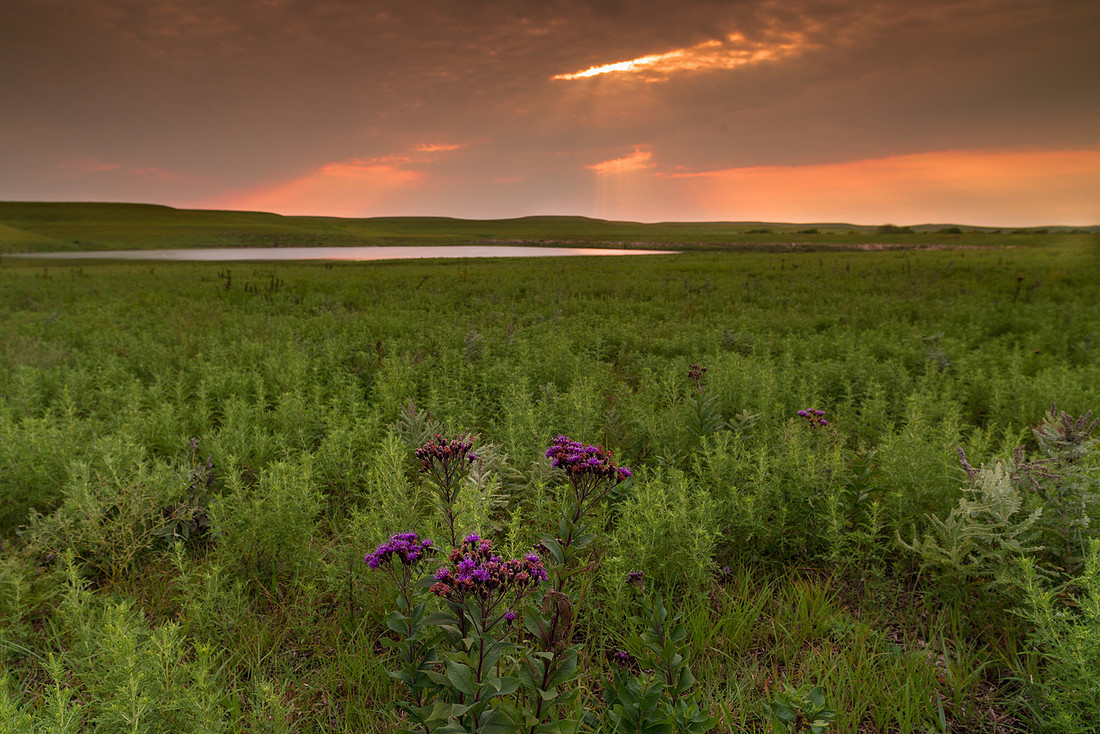
Blooming ironweed adds color to the tallgrass prairie along Sharps Creek Road in Chase County, south of Bazaar. Ironweed, although pretty, is a pasture weed, the most common one in Kansas. Cattle won't eat it because of its bitterness. If a pasture is overgrazed, ironweed flourishes. Behind the blooms is a small lake created by a dam on Sharpes Creek.
Teter Rock
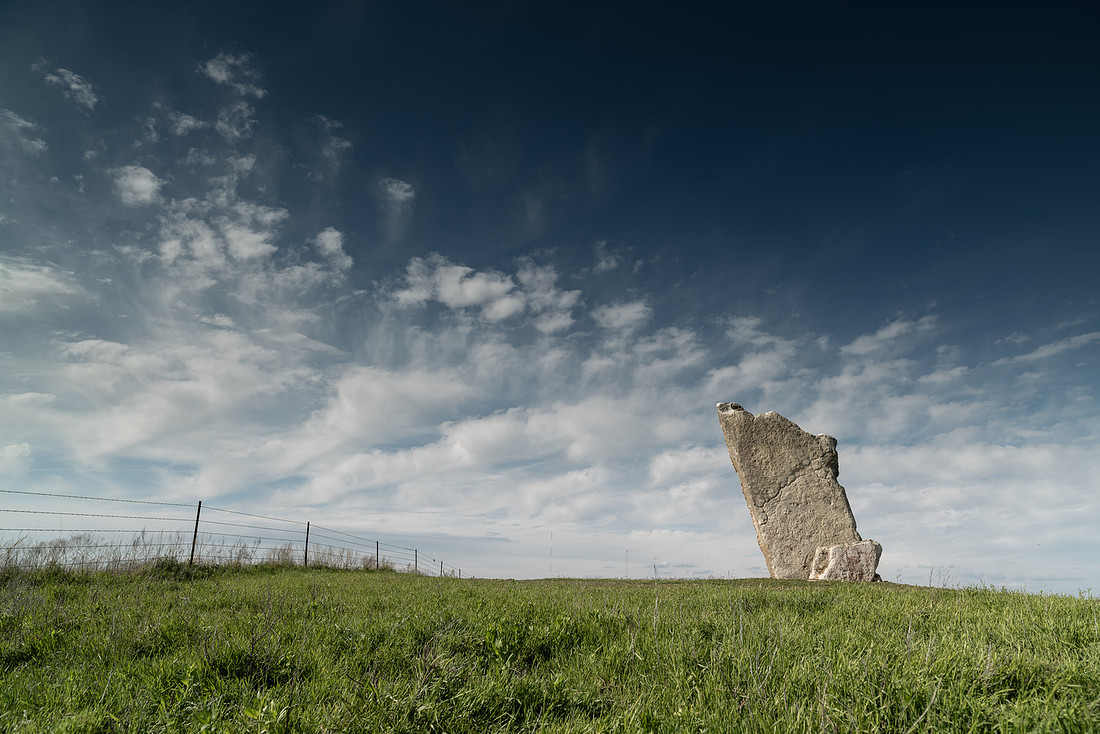
Visible for miles, Teter Rock crowns a high hill in the Flint Hills of Greenwood County. The hilltop once included a small town, which developed in the 1920s with the nearby discovery of oil. Nearly all evidence of the town now is gone now. But the 16-foot-tall limestone monument is a bit of a tourist attraction, albeit one reached only via a long, rough lane through the pasture. The monument was built in 1954 by the Greenwood County Historial Society to recognize a former rock landmark that served as a prairie guidepost in the late 1870s.
One-Steer Roundup
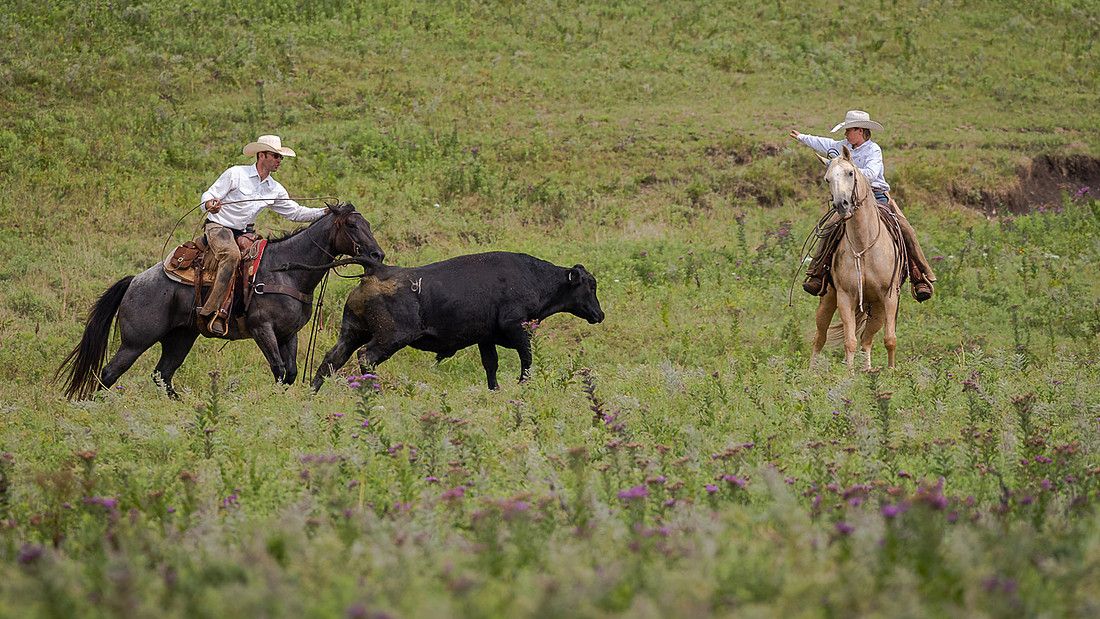
Cowboys Adrian Vogel, left, and Tegan Green, 12, attempt to lasso a trespassing steer in a Flint Hills pasture in northeast Butler County. The steer, apparently wild-eyed because of a recent journey in a cattle trailer, found itself in this situation after jumping fences two pastures east of here. It was an unwelcome visitor. Vogel said an ornery steer might taint a calm herd with bad habits, so he was anxious to get this one back to its owner. The steer was roped but it wouldn’t be led anywhere, let alone home. Instead, it opted to lie down in the pasture and, when provoked, charge Vogel and his horse, or Tegan and his horse. Vogel had the last word, though. He ended the frustration by tying the steer’s legs, preventing it from getting up, and calling the owner, advising him that he best bring a trailer. The adventure provided Tegan with valuable experience in working cattle with horses. He is from Laverne, Okla., and spending his summer with Kansas relatives working on a Flint Hills cattle ranch.
Mindful Steer
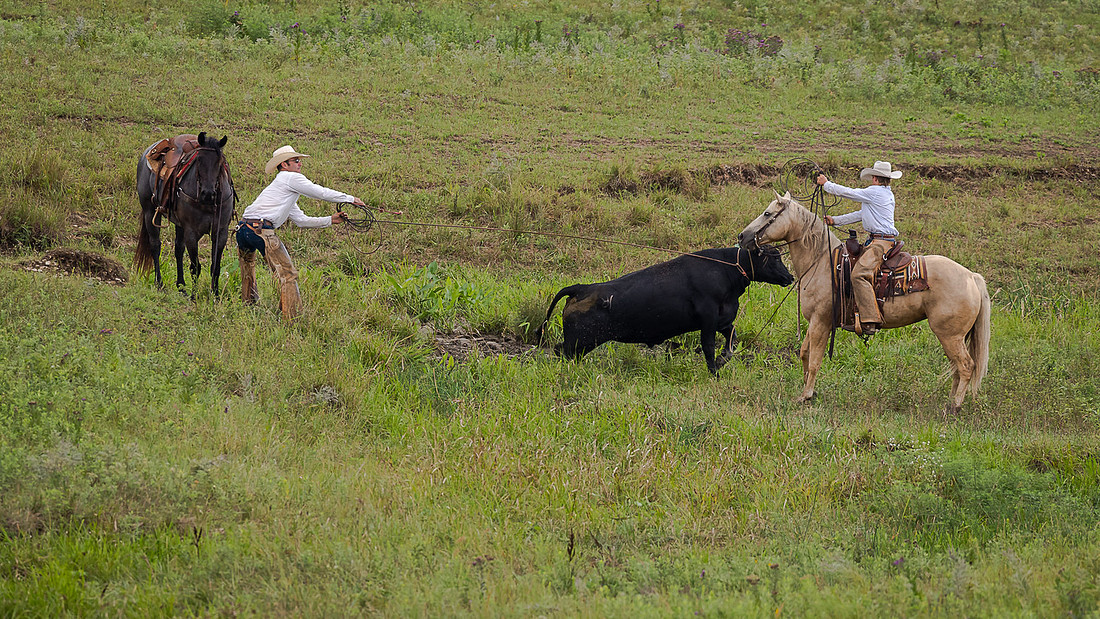
Cowboy Adrian Vogel attempts to hold a roped steer as it lunges in the direction of Tegan Green, 12, and his horse. The prairie drama ensued after the steer jumped fences to escape its owner's herd to the east. The unruly steer wouldn't be led so Vogel tied its legs and advised its owner to bring a trailer and haul it home.