Hillside Kiln
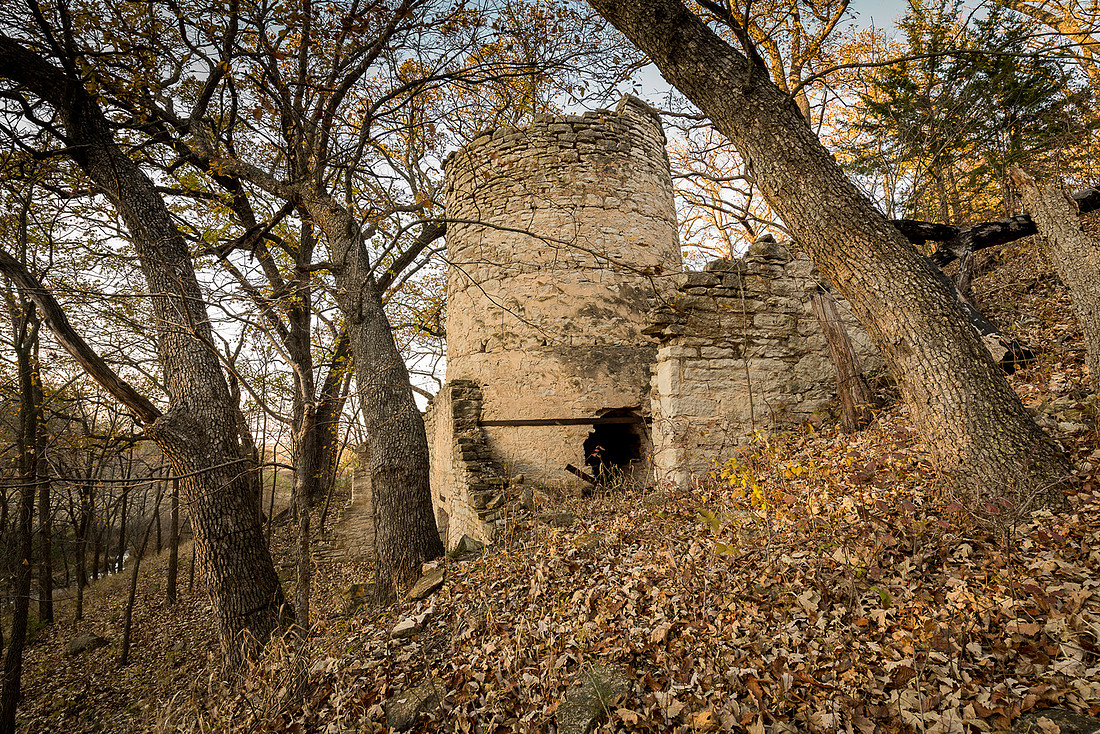

An imposing kiln, made of limestone in the late 1800s, stands vacant on a steep hillside near Alma. The kiln was a project of entrepreneurial brothers John F. and G.W. Limerick, who built it to make Portland cement from the plentiful limestone in the area. A paste of limestone aggregate was fed into the high-temperature kiln and the resulting "clinkers" were later ground into cement powder. Tom Parish of Emporia, who has researched and photographed Flint Hills history, says John Limerick's motivation was economic development for Alma, where he served for a time as mayor. The cement plant employed more than 40 workers before it was shut down in the early 1900s.
Fired No More
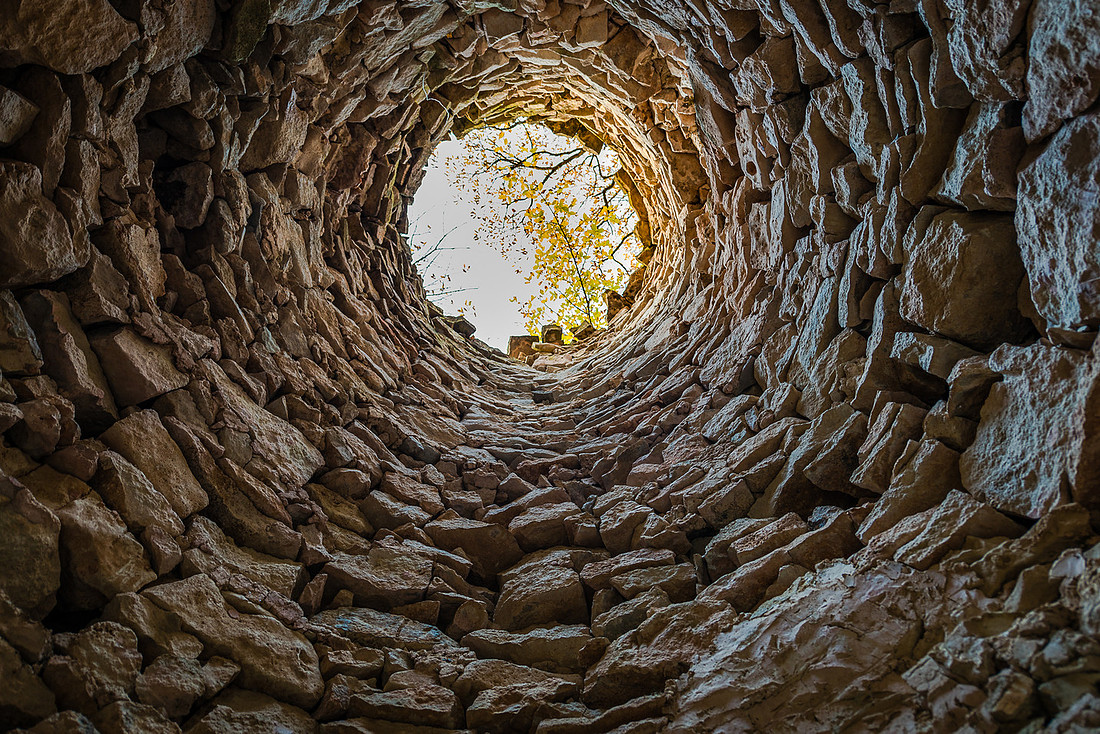
As seen from its belly, a limestone kiln built more than a century ago stretches to the open sky. The kiln, near Alma, was built to make Portland cement, and at one time employed more than 40 people. It was shut down in the early 1900s.
A Cellar of Stone
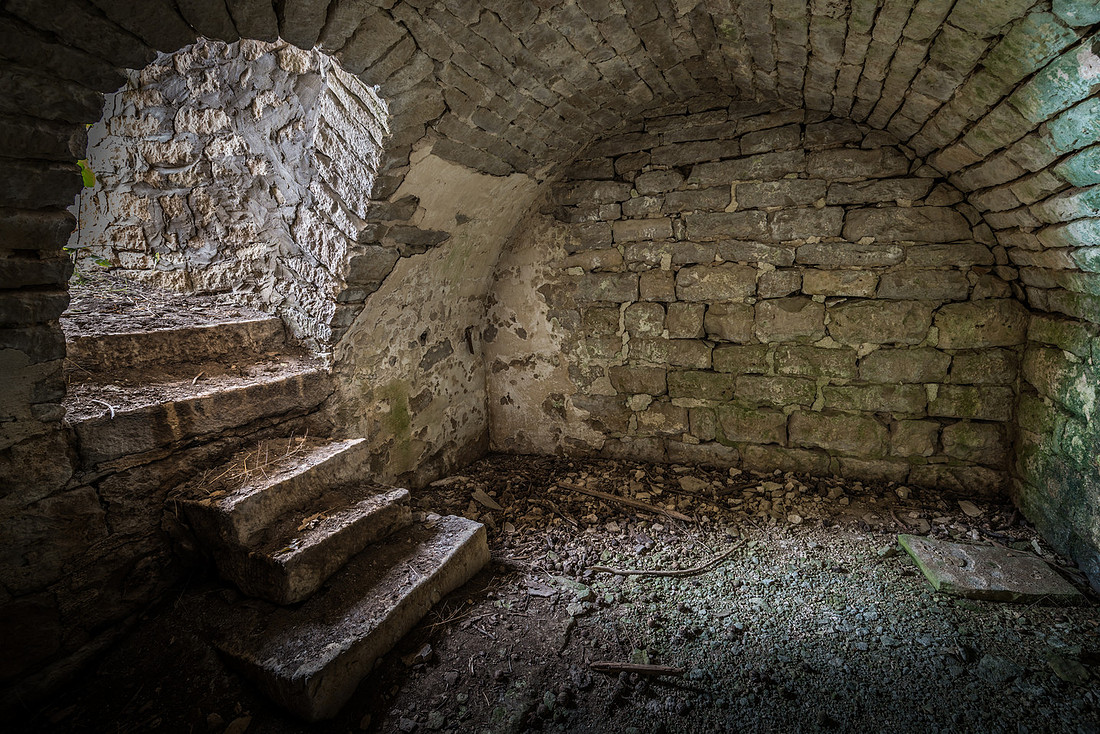
Finding limestone plentiful and trees scarce, early homesteaders in Wabaunsee County adapted by turning to grazing for their livelihood and stone for their building material. And one of the first structures typically built was a subterranean room with a stone-arched roof, such as this one. The structures perhaps provided temporary housing, but their more enduring purpose was to serve as root cellars and storm shelters. And endure they have. Tom Parish of Emporia has researched, explored and photographed more than 200 stone cellars in a five-county area of the Flint Hills, a project begun as part of his graduate work in arts at Kansas State University. He leads occasional cave tours arranged through The Volland Store, a restored hardware store that today serves as an art gallery and meeting space in what might best be described as the Volland ghost town. Parish said many early settlers to Wabaunsee County were Volga-Germans emigrating from Russian, and they brought with them familiarity with stone construction. With limestone near the surface and exposed in hillsides of the Flint Hills, they had easy access to ample supply. Parish’s cellar inventory includes many instances where limestone homes were later built either atop the original cellar, or nearby. Other outbuildings, all of stone, are often nearby. Most are in good shape, though many are no longer used. Parish has heard some present-day residents say they’ve never explored the cellar on their property. For more about Parish’s stone-arch cellar project, check out his website at www.flinthillshelters.com
Cellar Entrance
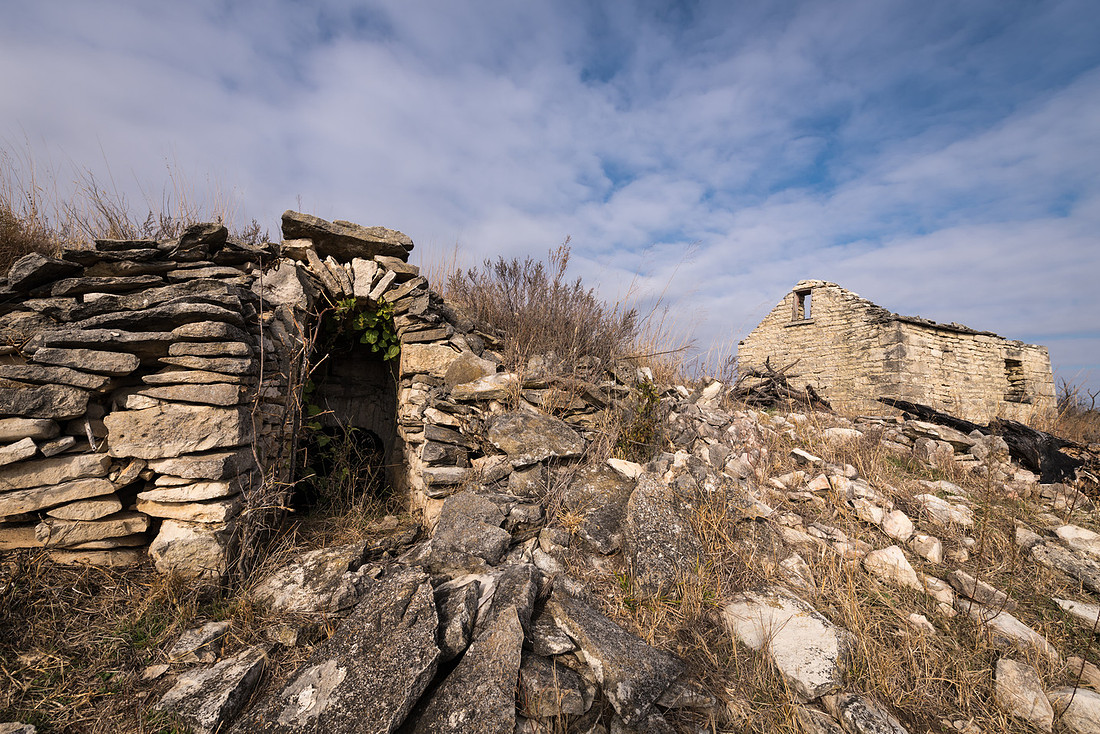
A limestone entrance leads into a subterranean stone-arch cave built into a Wabaunsee County hillside at the John Johnson homestead. He was one of the first homesteaders, arriving in the mid-1800s. The cave is intact but the limestone home nearby, which Johnson built later, is in ruins. Such caves, common in the Flint Hills, were used for food storage and as storm shelters. And in some cases they are believed to have provided initial housing for the settlers.
Konza at Dawn
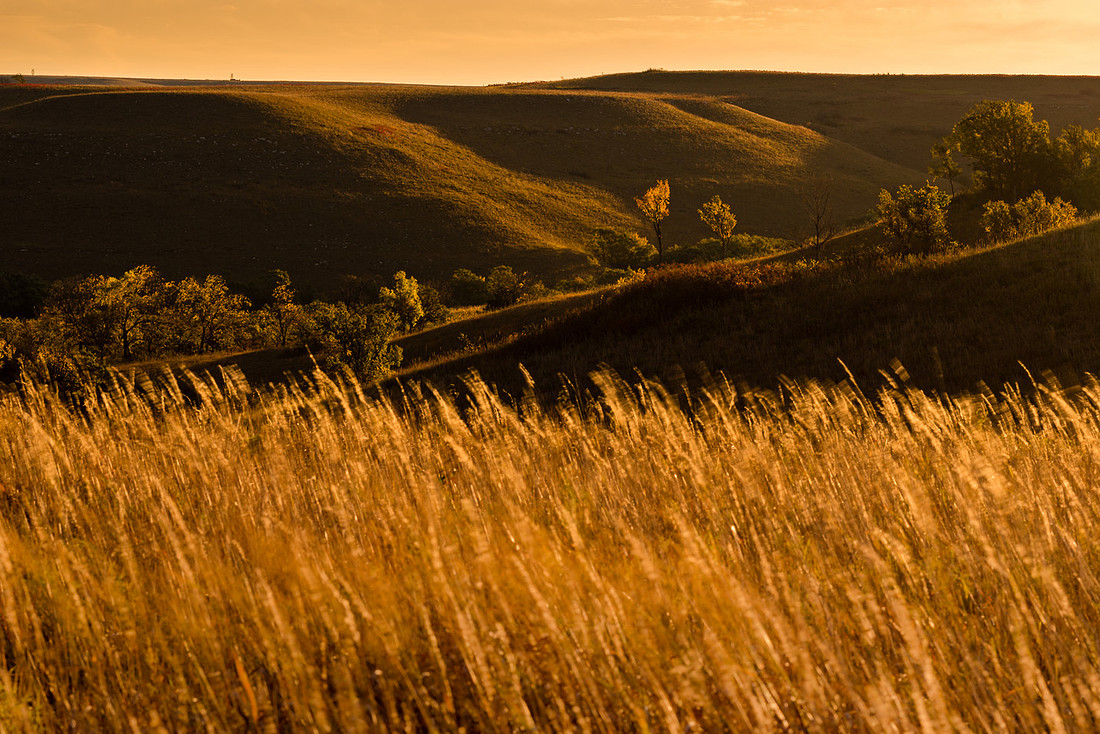
Tall grasses sway in the breeze as dawn breaks over the Konza Prairie southeast of Manhattan, Kan. The Konza, owned by The Nature Conservatory, is a Flint Hills research site managed by Kansas State University.
Toting Treats

With a bag of range cubes on his shoulder, farmer Josh Svaty leads his cattle to a summer pasture corral, where they will be loaded into a trailer for a 12-mile trip to winter quarters near the home place. The cattle have been taught to recognize the range cubes, which they savor; their craving helps convince them to follow orders. Some of the cattle will be sold soon, but others will be fed hay until spring turns the pastures green again. Svaty's cow-calf operation is part of his diversified farm south of Ellsworth. Besides farming, he is seeking the Democratic nomination in the 2018 Kansas governor's race. Svaty is a former state legislator and Kansas secretary of agriculture.
A Human Form, In Stone
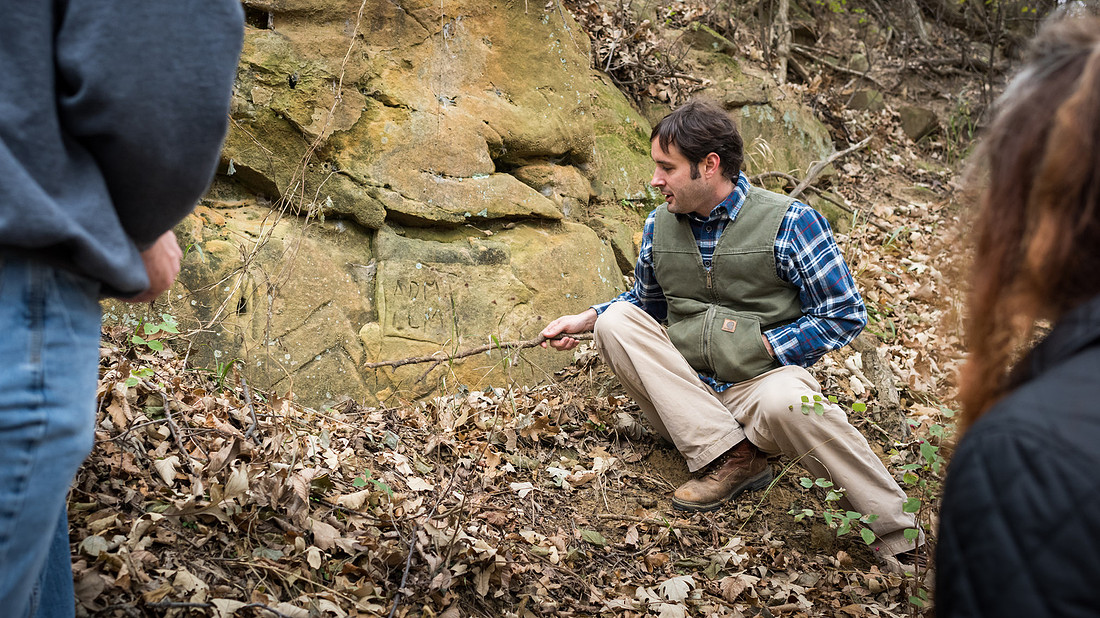
Josh Svaty, Ellsworth farmer, uses a stick to point out to Bethany College students the carving of a figure found in exposed sandstone near Kanopolis Reservoir. Svaty, who searches for and catalogs petroglyphs created by American Indians in central Kansas, led the tour for Bethany instructor Kristin Van Tassel's writing class. Petroglyphs are numerous in Ellsworth County, which is rich in sandstone in the Dakota geological formation. The exposed rocks are ancient — perhaps 100 million years old — and soft, thus easily carved. But because of that softness, the rock also is easily eroded and it's believed the Indian carvings were done within the past few hundred years. The Indian carvings are bold and powerful, often depicting the human form, animals and geometric designs. (Note that the rock Svaty is explaining has more recently been carved with initials; that work is more akin to graffiti and explains why landowners and petroglyph aficionados are reluctant to disclose the locations of historic carvings.)
The Art of Agriculture
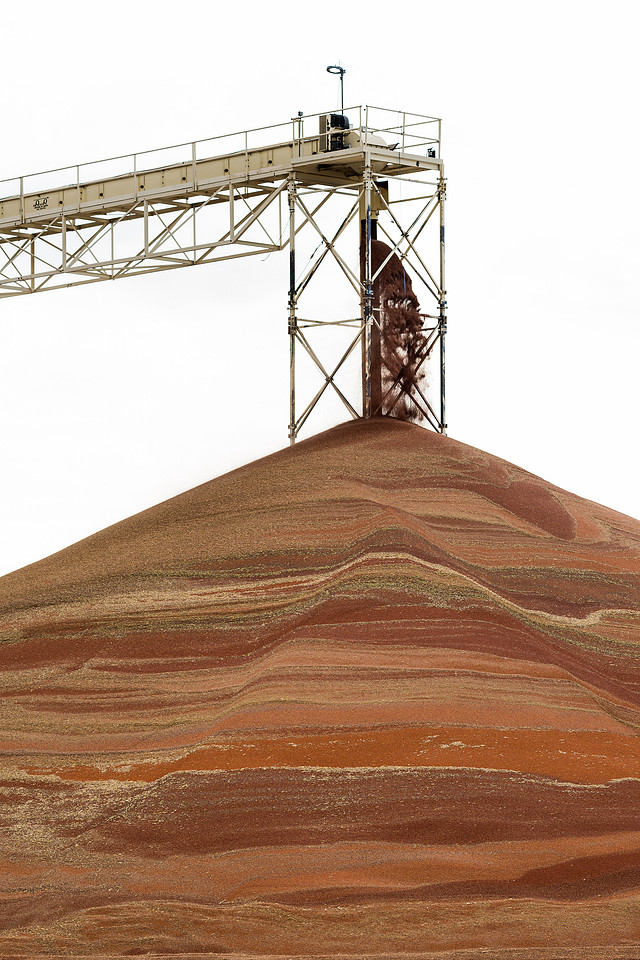
Newly harvested grain sorghum, in a wide variety of colors, creates a mosaic art form as it is added to a storage pile at the Cargill Inc. grain elevator east of WaKeeney, Kan. Grain sorghum is an ancient crop, originating in Africa and India some 8,000 years ago, and as a result infinite varieties — and colors — are available. In Kansas, which is the leading sorghum producing state in the nation, darker colors predominate — red, bronze and orange among them. In the United States, sorghum is primarily fed to livestock, although it also is used in ethanol production. But in other parts of the world, sorghum is a food staple and the colors of those varieties tend to be lighter, including white, cream and tan. Sorghum, also called milo, is ideally suited for much of dryland Kansas as it offers drought tolerance and high yield, and its grain packs high energy. Each of the heads typically contains about 1,000 round seeds. When Cargill turns off the tap to this pile it will contain about 1 million bushels, or about 56 million pounds of grain. From here it will travel by rail and truck to its ultimate destinations, including the feedlots of western Kansas.
Little Jerusalem
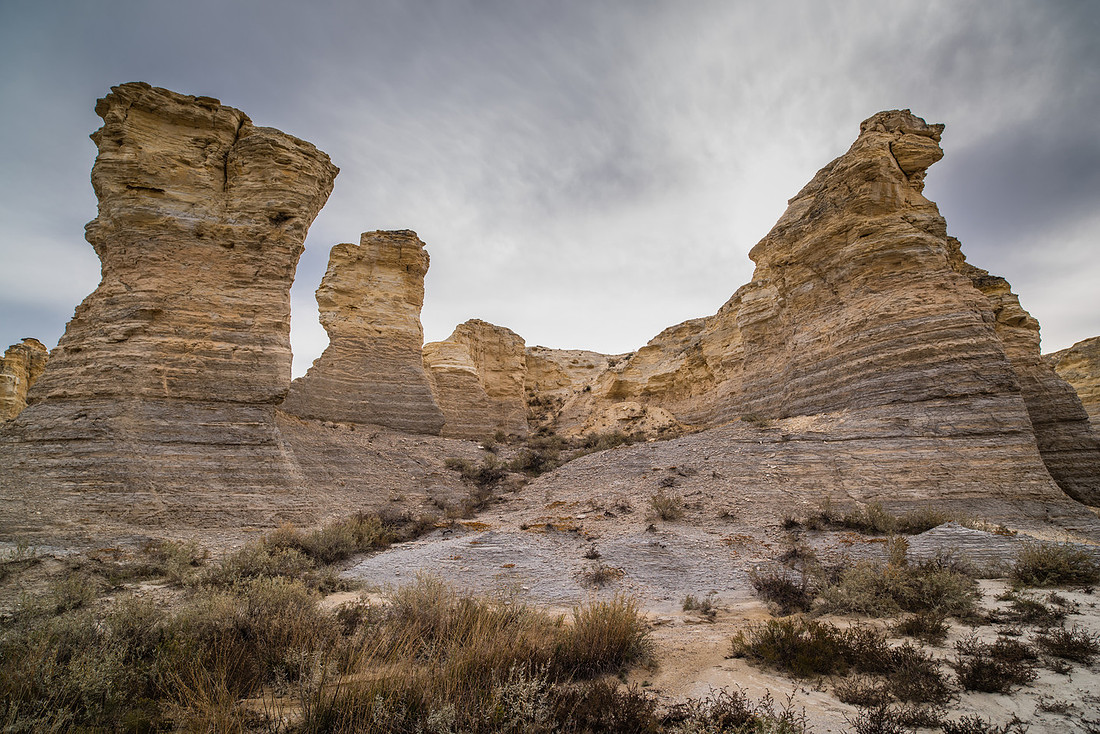
Limestone peaks, some reaching 100 feet, rise from the shortgrass prairie in Logan County, Kansas. This 250-acre site, long known as Little Jerusalem, was purchased by The Nature Conservancy in 2016, which also owns the adjoining 17,000-acre Smoky Valley Ranch south of Oakley. Little Jerusalem is closed to the public at present but the conservancy is working to develop a plan that will both allow public access and protect the delicate landscape of soft limestone and fossilized sea shells left from what 80 million years ago was an huge inland sea.
The Face of Change

The geological effects of millions of years are shown in the faces of Niobrara chalk outcroppings in Logan County known as Little Jerusalem. The soft limestone was formed some 80 million years ago when Kansas was part of an inland sea that stretched from what now is the Gulf of Mexico north to Alaska. At Little Jerusalem the ground is covered by what looks to be soft rock but actually is fossilized seashells, mostly clams and oysters. The site is closed to the public today but the owner, The Nature Conservancy, is working on a plan to open it to visitors. A key component of that plan is how to protect the fragile site. One challenge: conventional hiking trails would surely contribute to erosion. The conservancy also owns the adjacent Smoky Valley Ranch, which includes hiking trails that are open to the public.
Prairie Drama
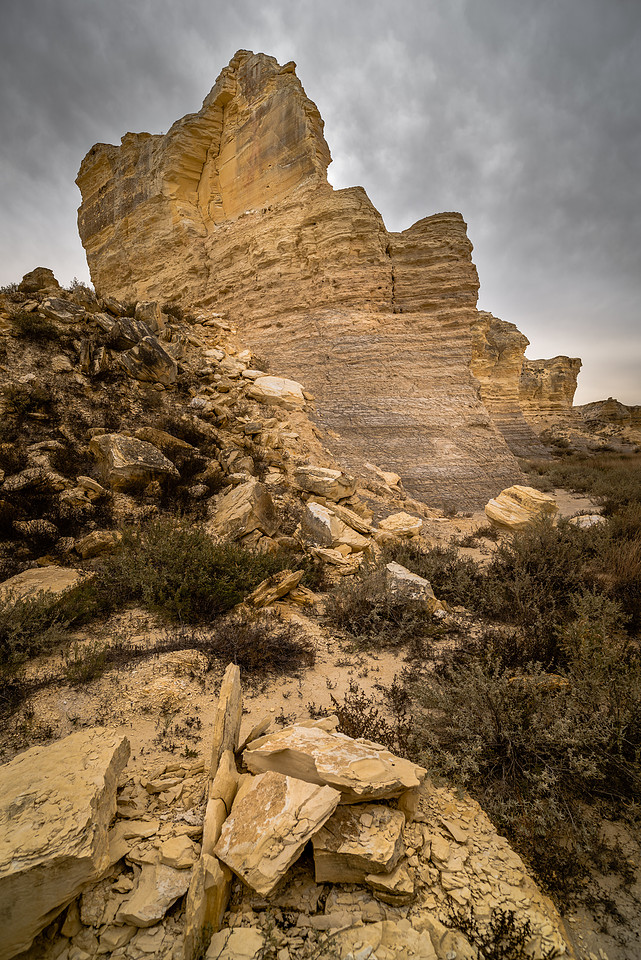
Jagged peaks of Niobrara chalk, a soft limestone, create a dramatic landscape known as Little Jerusalem in the Smoky Hill River valley south of Oakley, Kansas. The rock formations, covering more than 250 acres, is the largest chalk pyramid site in Kansas, dwarfing both Monument Rocks and Castle Rock, which are nearby. Little Jerusalem was part of the privately owned ranch of the Jim McGuire family for five generations before it was purchased in 2016 by The Nature Conservancy, which is developing a plan to allow public access.
A Town's Final Landmark
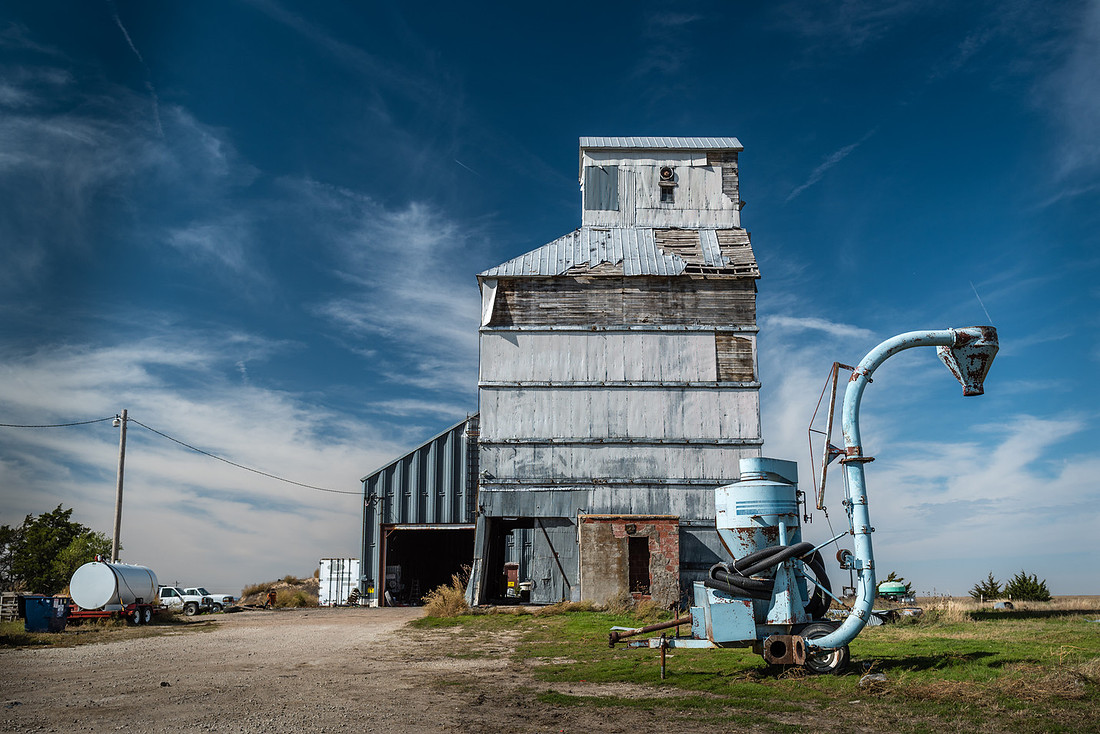
An old grain elevator sitting alongside railroad tracks at Pendennis is open — though not open for business. Pendennis, in Lane County on Kansas 4 Highway, today has the credentials of a ghost town. But once it had promise, sporting a railroad depot, post office and school in addition to the grain elevator. The post office, opened in 1894, was shut down more than half a century ago. The community merited no mention in the 2010 U.S. Census, and its existence has been erased from the official state highway map.