After the Burn
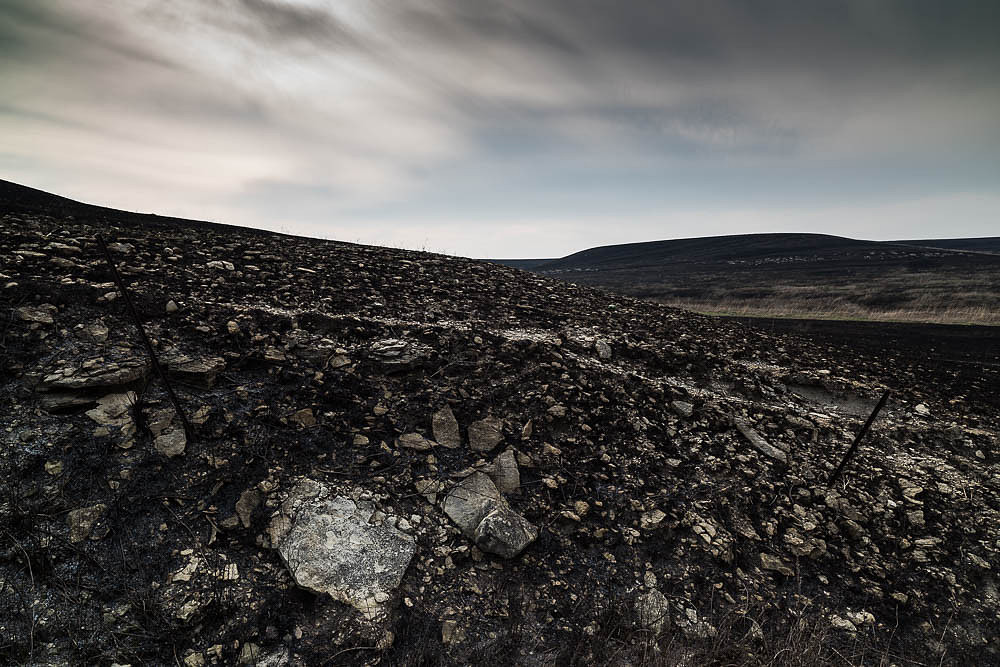

Blackened by fire, a tallgrasss prairie west of Matfield Green, Kan., prepares for regrowth and another season of cattle grazing. Fire is a friend of the prairie ecosystem, clearing grassland of previous growth and halting what could be an invasion of woody plants. Although this ground looks well charred, the root systems of prairie grasses are extensive and robust. Within days, new green shoots will appear and thrive — and the new growth is particularly attractive to cattle that will be brought here to graze. Note that the fire, consuming the topside vegetation, has exposed the cherty gravel, or flint, that is the primary characteristic of the Flint Hills. Once, the Great Plains contained more than 170 million acres of grassland. Fire then was part of the natural cycle of the ecosystem. Lightning was a common trigger, although Indians were known to start prairie fires, too, knowing that the regrowth would attract the bison herds. Nearly all of the virgin prairie has been plowed into farmland, with less than 4 percent remaining. Most of that is in the Kansas Flint Hills. Credit the cherty gravel for that. Its abundance is what spared the Flint Hills from the plow.
Singing Barber
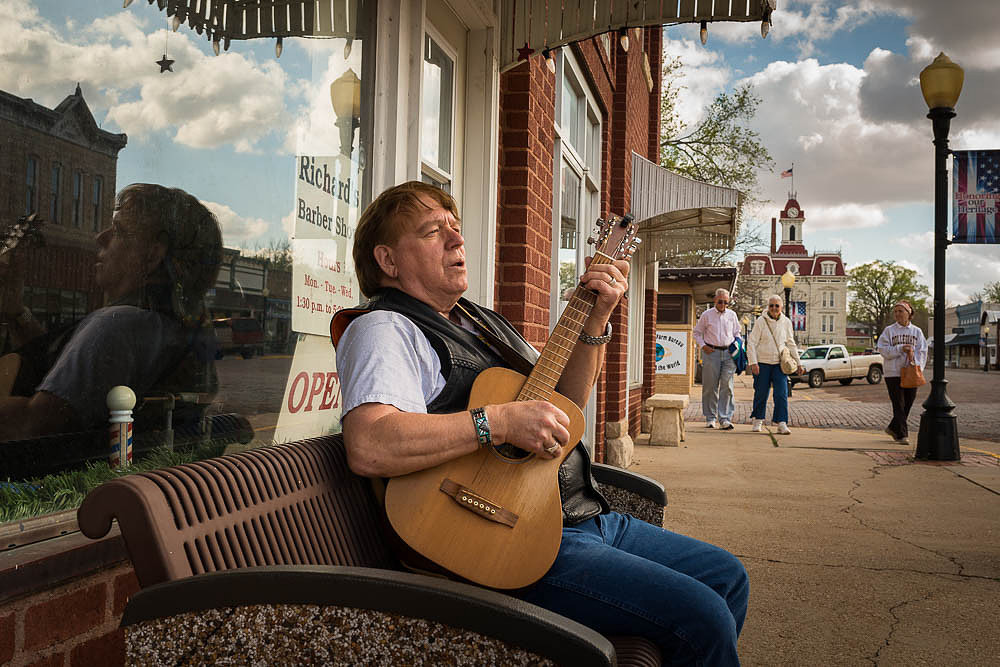
In between customers, barber Richard Stone plays his guitar and sings on a bench in front of his shop in downtown Cottonwood Falls. Stone's repertoire includes songs by Jerry Lee Lewis and other musicians he came to know while growing up in the 1950s. In the background is the Chase County Courthouse, built in 1878. It is the oldest operating courthouse in the state and is listed on the National Register of Historic Places.
Bountiful River
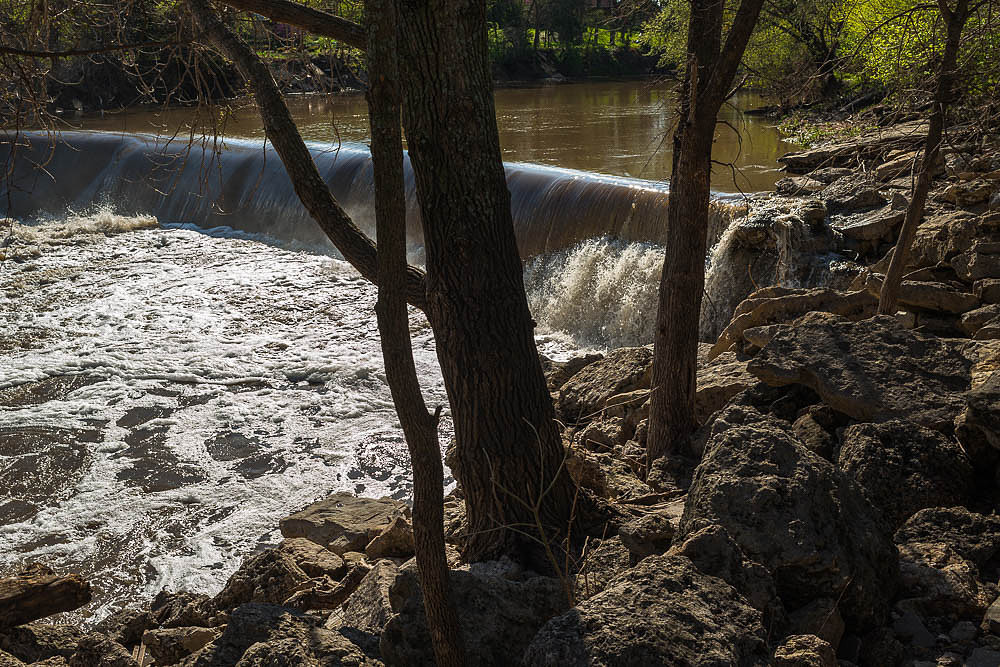
The Cottonwood River, swollen by Chase County rains of 5 to 7 inches in recent days, spills over the dam at Cottonwood Falls, Kansas. The rains have caused widespread flooding in Chase and Lyon counties. The first dam on this site of the Cottonwood was built of logs in 1860 to power a sawmill and gristmill. That dam was replaced by this one, made of cut limestone blocks, which have since been covered with concrete.
Artful Course
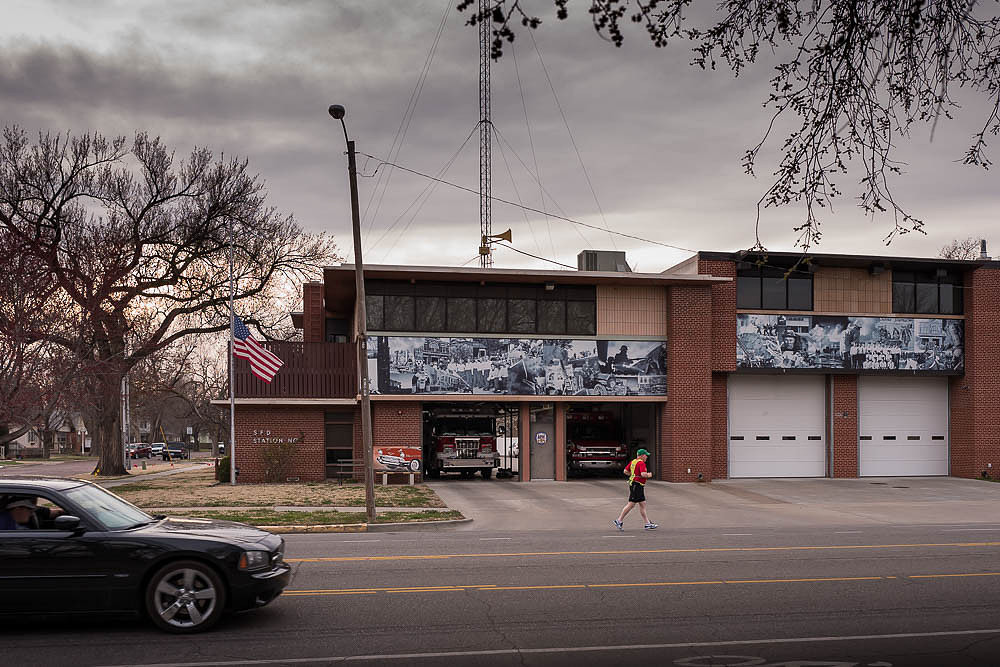
A jogger passes in front of the mural-decorated Fire Station No. 2 on Santa Fe Avenue in Salina. The mural depicts local fire events of historical significance, including news clippings from The Salina Journal.
Road? Where?
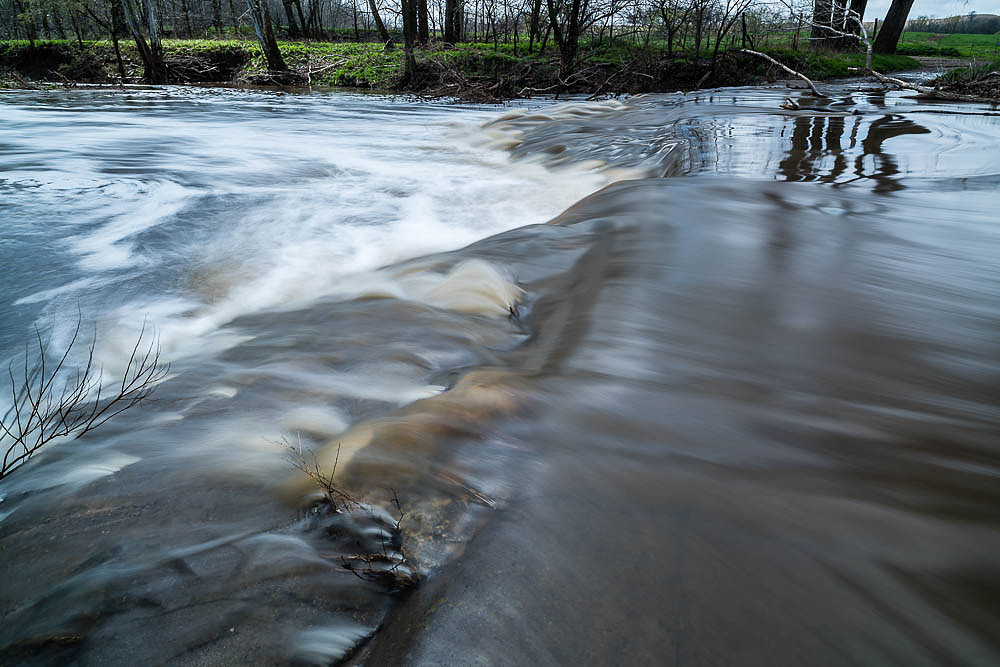
A low-water, concrete crossing is submerged in the rushing water of Diamond Creek south of Diamond Springs, Kan. The creek is swollen because of heavy rains in Morris County, and throughout central Kansas. When the creek falls, the roadway likely will still be blocked by tree limbs delivered by the floodwaters.
Full-Flowing Falls

A torrent of water cascades over the falls below the dam at the Chase State Fishing Lake west of Cottonwood Falls, Kan. Prather Creek is among many in central Kansas that have been swollen by more than 3 inches of rain in the past week. Here, Prather Creek falls about 40 feet in three falls. The upper fall, with the shortest drop, is not seen in this photograph. Heavy rains typically prompt many sightseers to visit the lake and hike the slippery slope to the creek to see (and hear) the impressive falls.
Gurley Salt Marsh
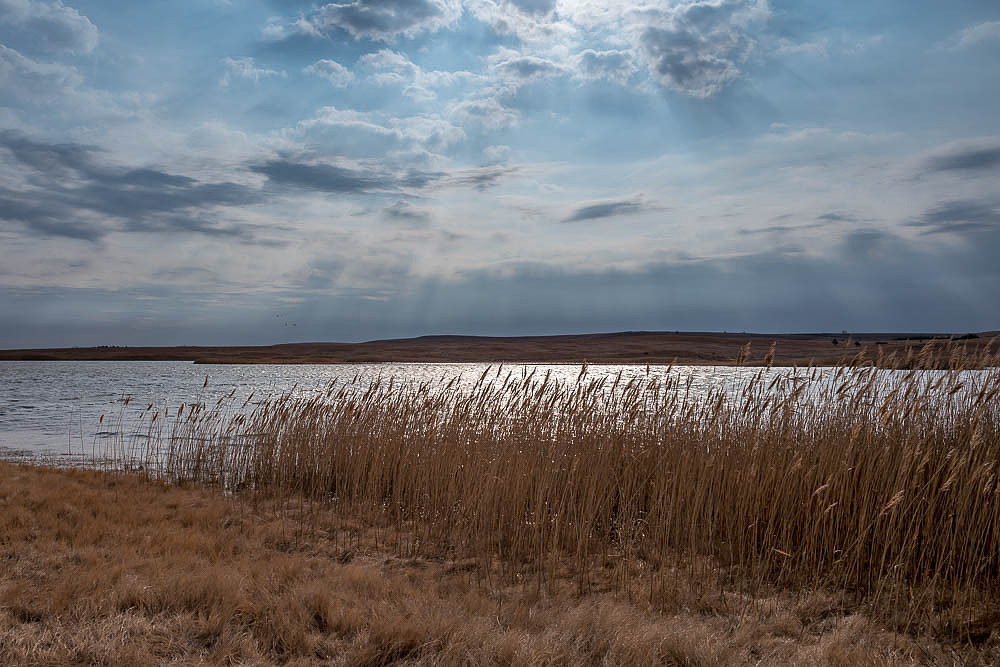
Late winter sun illuminates the Gurley Salt Marsh in northern Lincoln County. The 160-acre wetland was purchased by the state in 2012 from Jim Gurley, an elderly landowner who wanted to see the site preserved and spared of development. A grant from energy company ConocoPhillips helped make the transaction possible.
Launching the Day
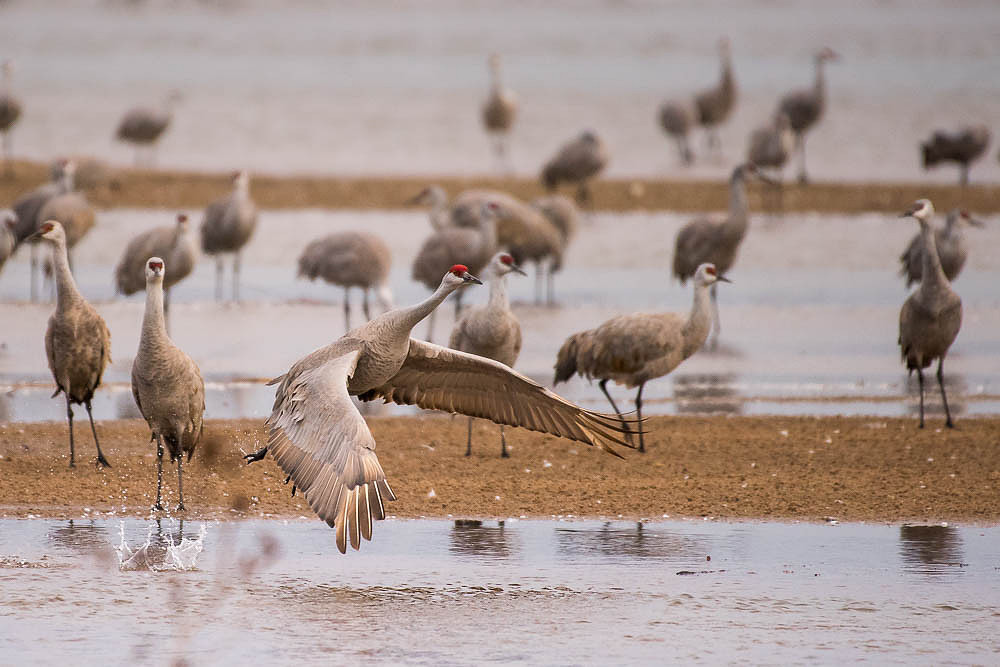
Shortly after dawn, a Sandhill Crane takes off from the Platte River to begin a day of feeding on waste corn in Nebraska farm fields. For thousands of years, the river in southern Nebraska has been a stopover point where cranes rest and refuel during their migration of more than 5,000 miles.
Taking Off
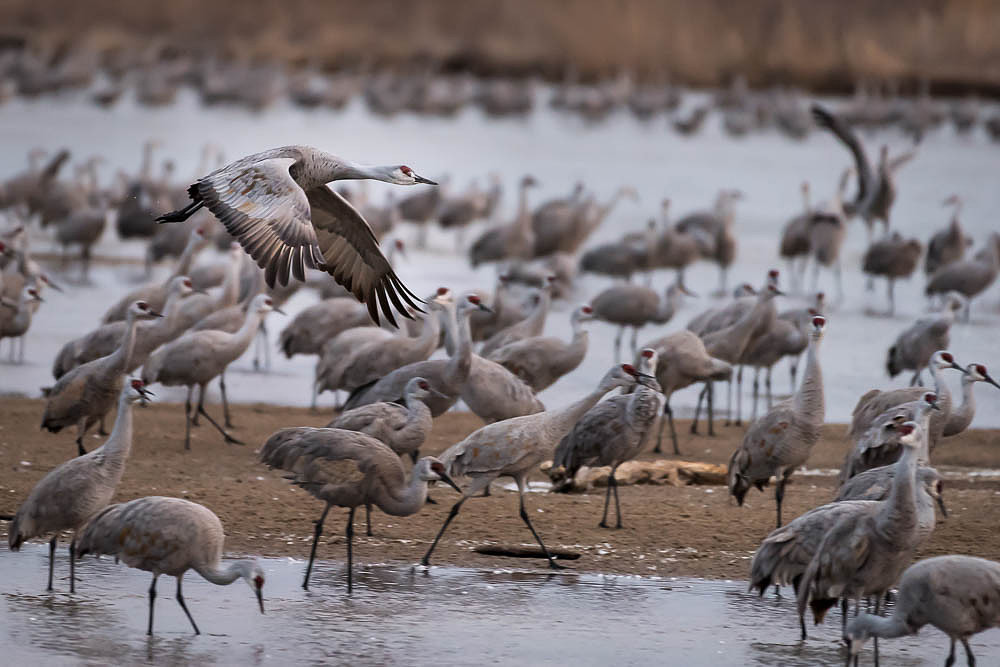
A Sandhill Crane takes wing to leave the Platte River for a day of feeding on Nebraska corn. The cranes, numbering about 100,000 or so on any given day, spend about three weeks on the Platte to rest and refuel before continuing their migration.
Playing in Water
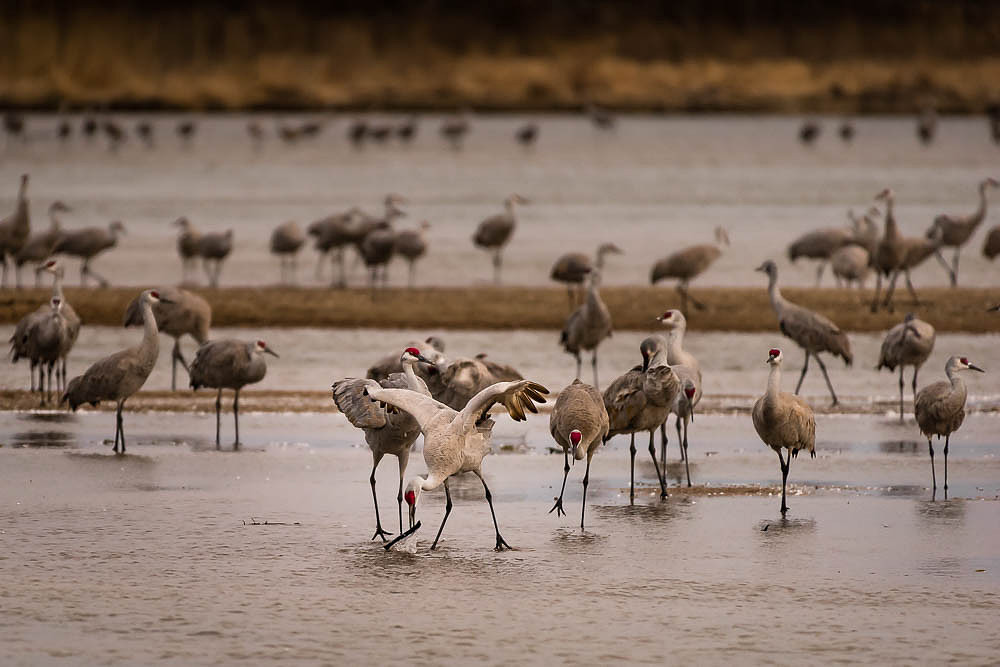
A Sandhill Crane finds amusement in tossing a stick plucked from the shallow waters of the Platte River south of Kearney, Neb. The river is a stopping, resting and feeding spot for some 400,000 cranes as they make their twice-yearly migration of some 5,000 to 7,000 miles.
Flying Together
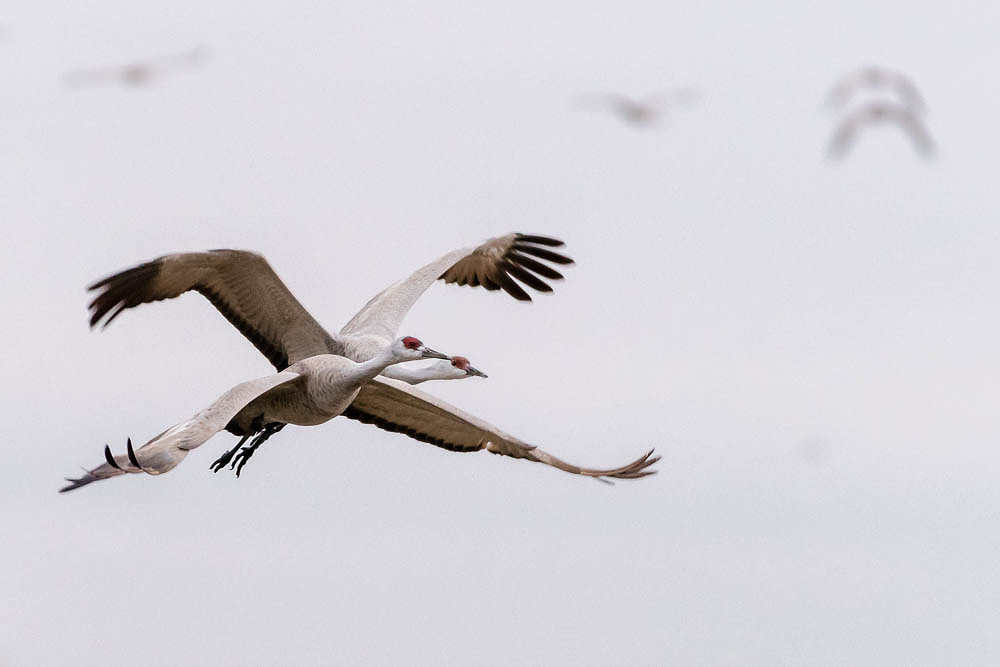
A pair of Sandhill Cranes fly in close proximity above the Platte River in Nebraska. The birds, with wingspans of 6 feet or more, can fly at 25-35 miles per hour. Their spring migration to breeding grounds as far north as Alaska and Eastern Siberia can cover 5,000 to 7,000 miles. For more than 10,000 years, they have stopped at the Platte to rest and refuel.
Winter Wheat
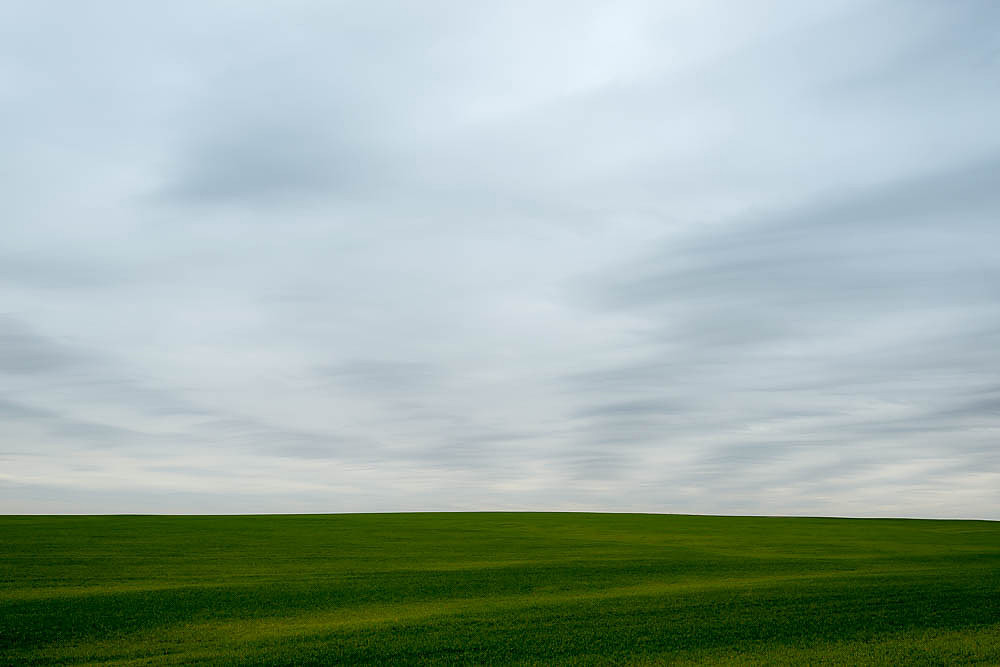
Winter wheat, planted last fall and dormant through the cold months, begins its spring growth under a cloudy sky south of Beloit, in Mitchell County, Kansas. The crop will mature, produce seed, turn golden as it dries and be ready for harvest in June.