Fielded, And Ready

May 01, 2017

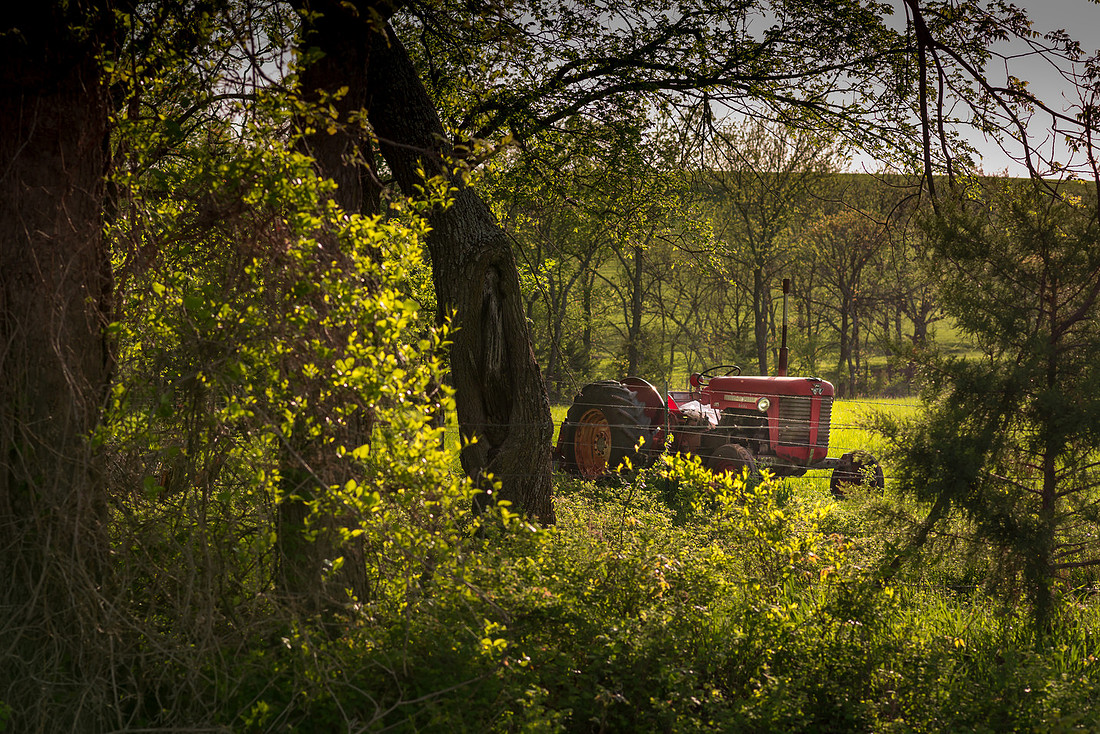
Seirer_170424_5620.jpgSeirer_170424_5620.jpgFielded, And Ready An old Massey Ferguson tractor stands ready for spring service. The tractor was parked for the winter at the seam where a farm field meets the trees and brush flanking Coyne Branch Creek south of Clements in Chase County.


An old Massey Ferguson tractor stands ready for spring service. The tractor was parked for the winter at the seam where a farm field meets the trees and brush flanking Coyne Branch Creek south of Clements in Chase County.


Approaching Rain
April 30, 2017

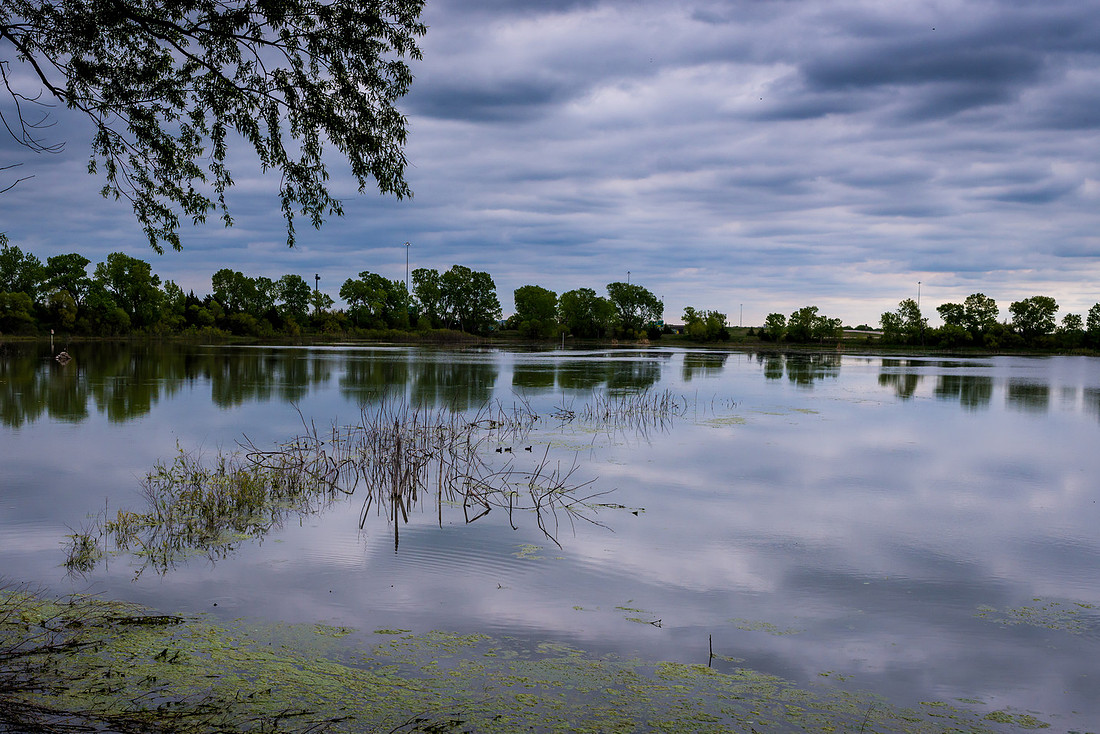
Seirer_170425_5630.jpgSeirer_170425_5630.jpgApproaching Rain Clouds roll in over the pond at the Harold Lear Sanctuary maintained by the Smoky Hills Audubon Society. The lake provides habitat for waterfoul and shore birds, but the loccal Audubon Society chapter also is developing a prairie ecosystem for ground-nesting birds at the 67-acre sanctuary near the intersection of Interstate Highways 135 and 70.


Clouds roll in over the pond at the Harold Lear Sanctuary maintained by the Smoky Hills Audubon Society, Salina. The lake provides habitat for waterfowl and shore birds, but the local Audubon Society chapter also is developing a prairie ecosystem for ground-nesting birds at the 67-acre sanctuary near the intersection of Interstate Highways 135 and 70.


Intruder
April 29, 2017

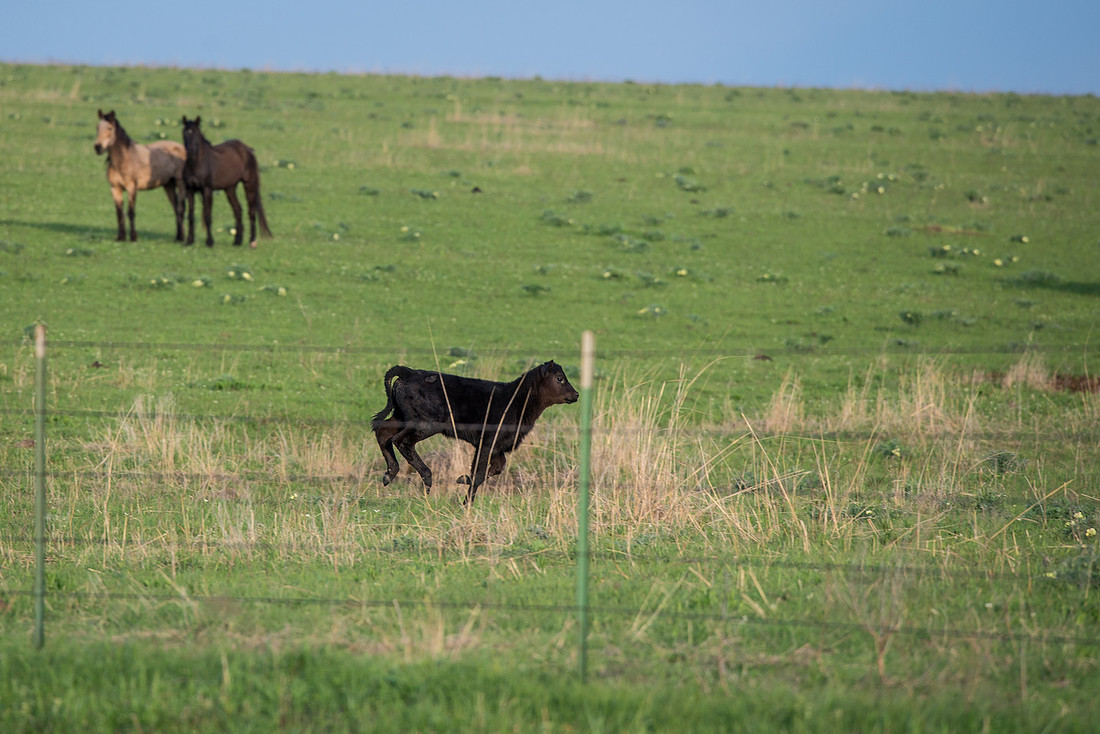
Seirer_170428_6057.jpgSeirer_170428_6057.jpgIntruder A calf, fighting freedom and full of angst, bolts past wild mustangs as it fruitlessly seeks to solve a maze of pasture fences east of Cassoday. The tale began when the calf escaped its home pasture by following a small gully wash under the barbed wire, emerging into the ditch of Butler County Road 150. Quickly realizing that freedom is overrated, among calves, at least, Calf No. 432 studied and nudged the fence that now enforced its exile. It turned to the road and studied that, too. But apparently concluding it was no highway home, the calf returned to the fence and began walking the line, heading east, away from home and adjacent to the pasture claimed by a herd of horses. Breaking into a run, the calf added to its distance from home before stopping and examining the fence again and then turning west, at a walk, until it spotting a small opening through which it scooted —into the neighboring pasture. The calf bolted, startling and stirring the mustangs, as it headed for Mom, monitoring the crisis from the other side of the fence that separates the pastures. Now it was that fence that thwarted a reunion and the calf, anxiety at full throttle, ran alongside it for the deep south. Mom seemed torn. Should she maintain her border patrol or return to the herd? She turned toward the herd. And then turned back. The calf stopped. Mom ambled south. The dilemma continued, but not for long. A rancher quickly arrived to orchestrate the reunion.

A calf, fighting freedom and full of angst, bolts past wild mustangs as it fruitlessly seeks to solve a maze of pasture fences east of Cassoday in the Kansas Flint Hills. The tale began when the calf escaped its home pasture by following a small gully wash under the barbed wire, emerging into the ditch of Butler County Road 150. Quickly realizing that freedom is overrated, among calves, at least, Calf No. 432 studied and nudged the fence that now enforced its exile. It turned to the road and studied that, too. But apparently concluding it was no highway home, the calf returned to the fence and began walking the line, heading east, away from home and adjacent to the pasture claimed by a herd of horses. Breaking into a run, the calf added to its distance from home before stopping and examining again both the fence and the road and then turning west, at a walk, until it spotting a small opening through which it scooted —into the neighboring pasture. The calf bolted, startling and stirring the mustangs, as it headed for Mom, monitoring the crisis from the other side of the fence that separates the pastures. Now it was that fence that thwarted a reunion and the calf, anxiety at full throttle, ran alongside it for the deep south. Mom seemed torn. Should she maintain her border patrol or return to the herd? She turned toward the herd. And then turned back. The calf stopped. Mom ambled south. The dilemma continued, but not for long. A rancher quickly arrived to orchestrate the reunion.


Working For Bird-Friendly Habitat
April 28, 2017

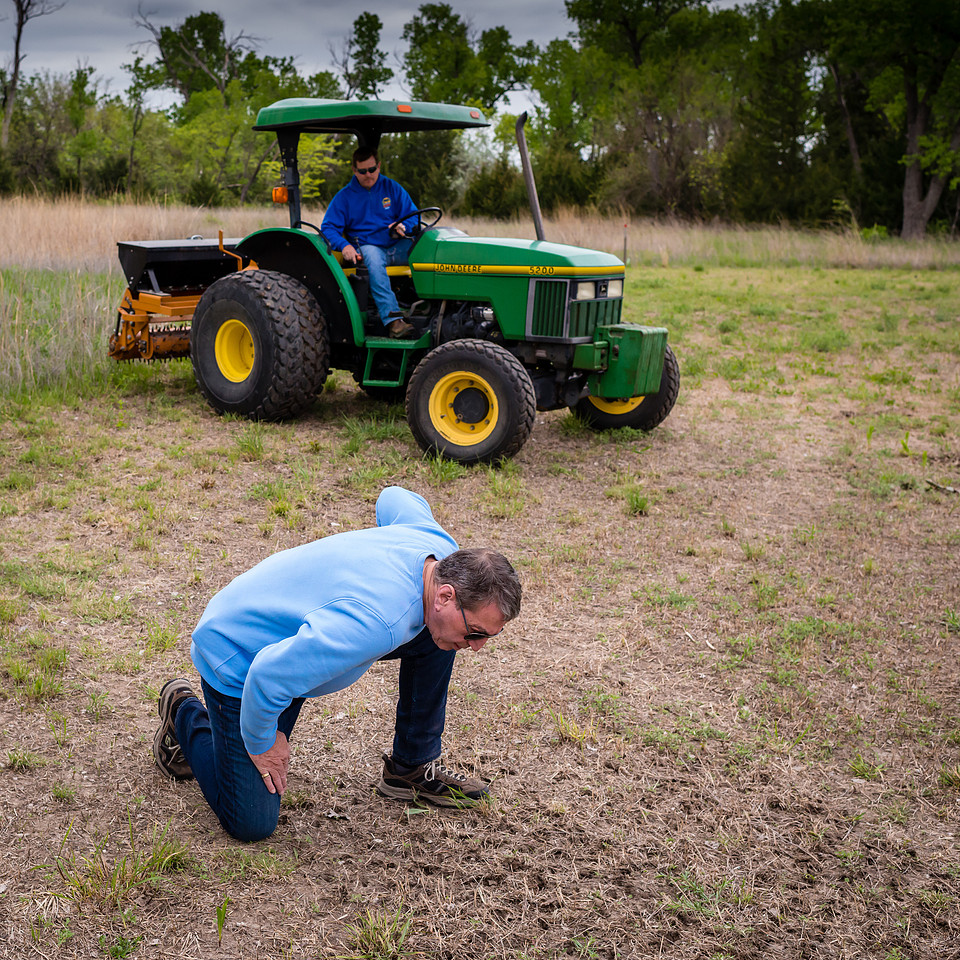
In Search of Bird-Friendly HabitatIn Search of Bird-Friendly HabitatDan Baffa of the Smoky Hills Audubon Society takes a close look at the ground to check the seeding of native plants at the group's wildlife sanctuary northwest of Salina. The Audubon group is replacing brome grasses by seeding a mixture of native grasses and wildflowers that will attract the bugs and insects needed by birds. The brome grasses, quite invasive, create a thick mat at ground level not welcome by ground-nesting birds. Brome also outcompetes other plants, creating a monoculture that spoils the natural prairie ecosystem. The planting project at the Audubon sanctuary is funded, in part, by a Kansas Department of Wildlife and Parks. The Rolling Hills Zoo is assisting with the project by drilling the seed. On the tractor, Garrett Morris, the zoo's horticulture supervisor, pauses while Baffa checks the planting rate.


Dan Baffa of the Smoky Hills Audubon Society takes a close look at the ground to check the seeding of native plants at the group's wildlife sanctuary northwest of Salina. The Audubon group is removing brome grasses at the 67-acre sanctuary and seeding a mixture of native grasses and wildflowers that will attract the bugs and insects needed by birds. The goal is a small prairie environment. Brome grasses, quite invasive, create a thick matt at ground level that ground-nesting birds find undesirable. Further, brome outcompetes other plants, creating a monoculture that spoils the natural prairie ecosystem. The planting project at the Audubon sanctuary is funded, in part, by a grant from the Kansas Department of Wildlife and Parks. The Rolling Hills Zoo is assisting by drilling the seed. On the tractor, Garrett Morris, the zoo's horticulture supervisor, pauses while Baffa checks the seeding rate.


Home on the Range
April 27, 2017

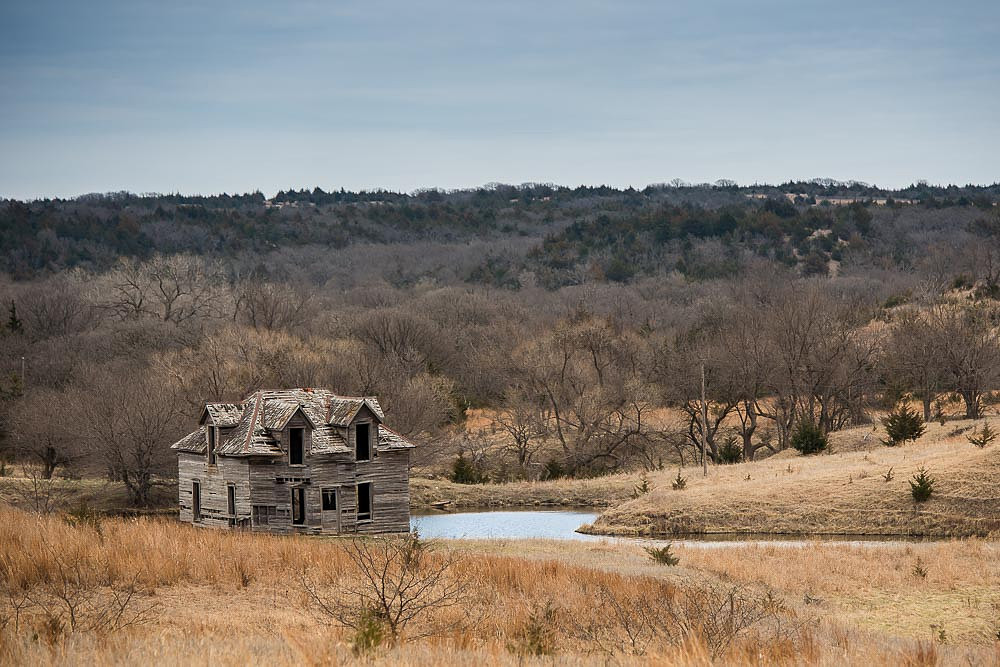
Seirer_170322_3629.jpgSeirer_170322_3629.jpgHome on the Range Although it lacks occupants, maintenance and paint, this abandoned, two-story farmhouse still commands attention, and a bit of mystique, on Kansas Highway 14 just south of Lovewell Lake. The once-grand house is believed to have been built in the 1890s, according to Alva Tyler, who remembered growing up there during the Dust Bowl days of the 1930s. The house with five gables and three bedrooms sits next to a pond in a picturesque Jewell County valley quite a distance from today’s highway. Long gone are the barn, garage, hen house and outhouse. The house never knew indoor plumbing, and Tyler told a writer that, to his recollection, it was never painted. John E. Price Sr., who bought the farmhouse and land in 1988 from the Tyler family, said it was the family’s wish that the house not be painted. He’s not only complied with that request, he’s played along to nurture the eeriness of the place known locally as “Casper’s House.” At Halloween, he places ghost images in the windows.

Although it lacks occupants, maintenance and paint, this abandoned, two-story farmhouse still commands attention, and a bit of mystique, on Kansas Highway 14 just south of Lovewell Lake. The once-grand house is believed to have been built in the 1890s, according to Alva Tyler, who remembered growing up there during the Dust Bowl days of the 1930s. The house with five gables and three bedrooms sits next to a pond in a picturesque Jewell County valley quite a distance from today’s highway. Long gone are the barn, garage, hen house and outhouse. The house never knew indoor plumbing, and Tyler told a writer that, to his recollection, it was never painted. John E. Price Sr., who bought the farmhouse and land in 1988 from the Tyler family, said it was the family’s wish that the house not be painted. He’s not only complied with that request, he’s played along to nurture the eeriness of the place known locally as “Casper’s House.” At Halloween, he places ghost images in the windows.


Green Again, And Quickly
April 25, 2017

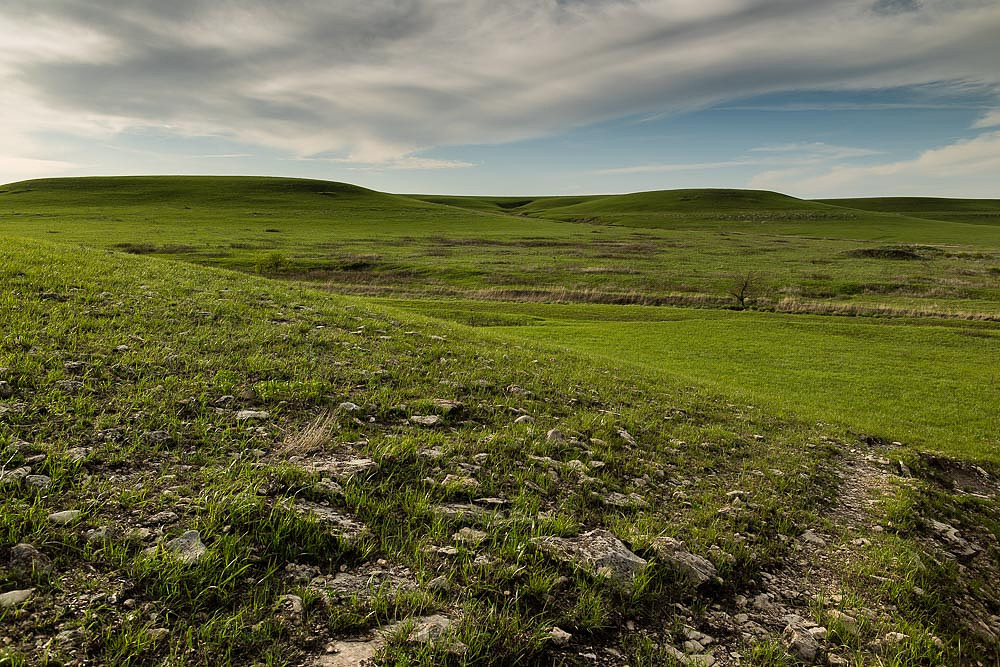
Seirer_170424_3960.jpgSeirer_170424_3960.jpgGreen Again, And Quickly Refreshed by fire only a couple of weeks ago, this tallgrass prairie west of Matfield Green, Kan., experiences a flush of new growth. Fire is a natural governor of the prairie ecosystem, protecting the rolling hills from invasion of shrubs and trees. The extensive roots of the grasses, undisturbed, respond to fire by feeding new growth that cattle find particularly appealing. Studies have shown that burning can increase cattle weight gain by about a quarter of a pound per day. Refer to the blog of April 8 to see how this pasture looked immediately after the fire.

Refreshed by fire only a couple of weeks ago, this tallgrass prairie west of Matfield Green, Kan., experiences a flush of new growth. Fire is a natural governor of the prairie ecosystem, protecting the rolling Flint Hills from invasion of shrubs and trees. The extensive roots of the grasses, undisturbed, respond to fire by feeding new growth that cattle find particularly appealing. Studies have shown that cattle gain an extra quarter pound of weight per day when grazing on grassland that has been burned. The economics of that has made annual planned burning a ritual throughout  the 82,000 acres of the Flint Hills. Much of that burning occurs in the spring. Refer to the blog of April 8 to see how this pasture looked immediately after the fire.


House Peeping
April 22, 2017

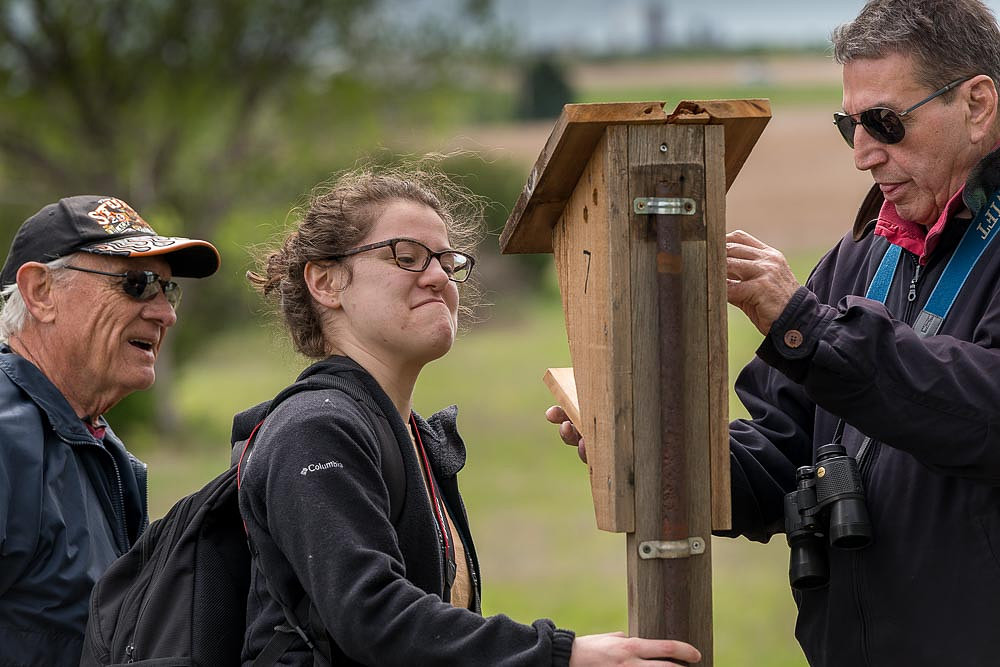
Seirer_170422_5519.jpgSeirer_170422_5519.jpgHouse Peeping Dan Baffa, right, drops the lid of bluebird house number 7 to reveal three blue eggs, momentarily unattended, to participants of the monthly Nature Walk at the Smoky Hills Audubon Society. The Saturday walk was at the organization's 67-acre wildlife refuge just northwest of Salina. The hiking trails are peppered with nearly three dozen bluebird houses that are monitored throughout the season. Baffa, a board member of the organization, led the walk.


Dan Baffa, right, drops the lid of bluebird house No. 7 to reveal three blue eggs, momentarily unattended, to participants of the monthly Nature Walk at the Smoky Hills Audubon Society. The Saturday walk, on Earth Day, was at the organization's 67-acre wildlife refuge just northwest of Salina. The hiking trails there are peppered with nearly three dozen bluebird houses that are monitored weekly throughout the season. Baffa, a member of the Smoky Hills Audubon board, led the walk.


Flowers Mark the Trail
April 19, 2017

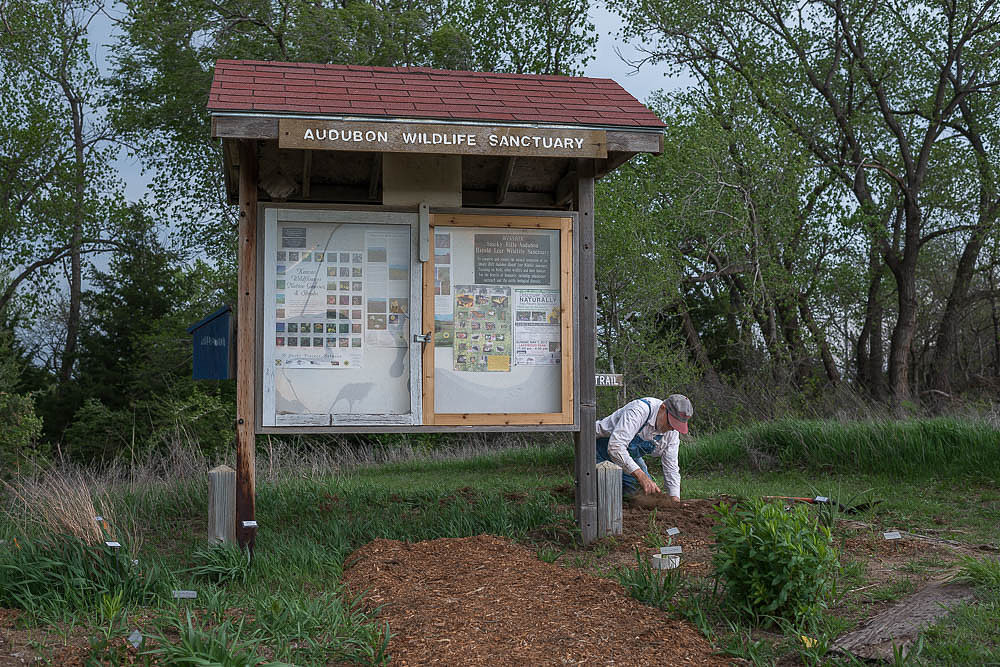
Seirer_170419_5105.jpgSeirer_170419_5105.jpgFlowers Mark the Trail Ted Zerger, a volunteer and member of the Smoky Hills Audubon Society, tends a flower bed at the kiosk that welcomes visitors to the group's sanctuary. The 67-acre sanctuary, which includes a pond, walking trails and birding opportunities, is near the intersection of Interstate Highways 70 and 135 just northwest of Salina, Kansas.

Ted Zerger, a volunteer and member of the Smoky Hills Audubon Society, tends a flower bed at the kiosk that welcomes visitors to the group's wildlife sanctuary. The 67-acre sanctuary, which includes a pond, walking trails and birding opportunities, is near the intersection of Interstate Highways 70 and 135 just northwest of Salina, Kansas.


Chicken Dancer
April 12, 2017

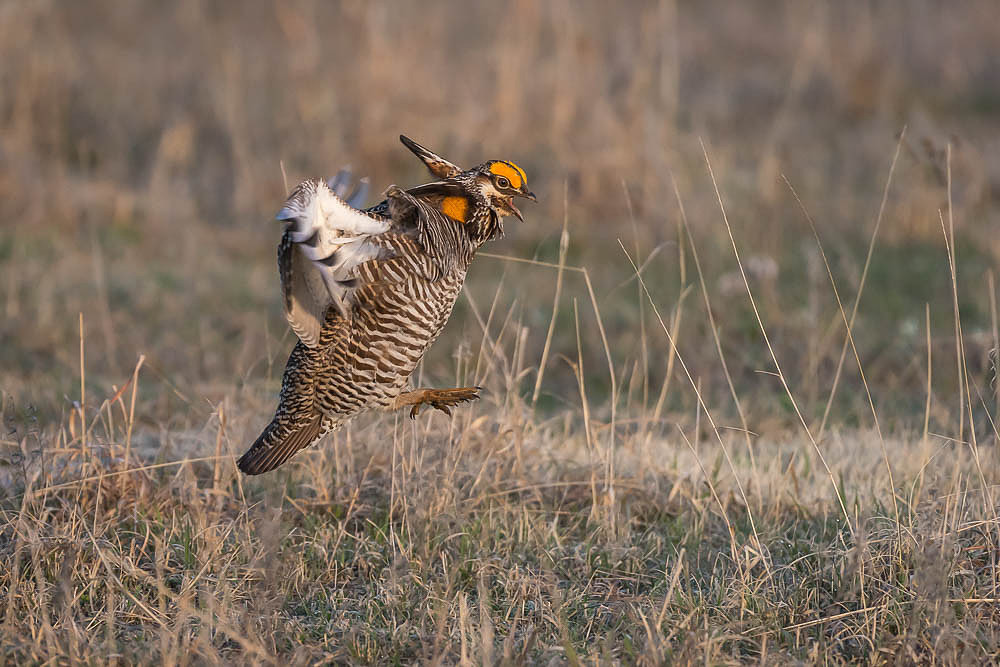
Seirer_170411_1867.jpgSeirer_170411_1867.jpgDancing Prairie Chicken A male Greater Prairie Chicken dances at a communal breeding ground, called lek, in central Kansas. The prairie chicken is a ground-nesting grouse at home in both shortgrass and tallgrass prairie. Its greatest risk as a species is loss of habitat. This lek is on privately owned property near Cheyenne Bottoms. The Kansas Wetlands Education Center at Cheyenne Bottoms has arranged with the landowner to set up a viewing blind at the lek. Each spring, during the mating season, the center ushers small groups to the blind, where they can view the extraordinary prairie chicken mating ritual that begins at first light.

A male Greater Prairie Chicken dances at a communal breeding ground, called lek, in central Kansas. The prairie chicken is a ground-nesting grouse at home in both shortgrass and tallgrass prairie. Its greatest risk as a species is loss of habitat. This lek is on privately owned property near Cheyenne Bottoms. The Kansas Wetlands Education Center at Cheyenne Bottoms has arranged with the landowner to set up a viewing blind at the lek. Each spring, during the mating season, the center ushers small groups to the blind, where they can view the extraordinary prairie chicken mating ritual that begins at first light.


Showing His Stuff
April 12, 2017

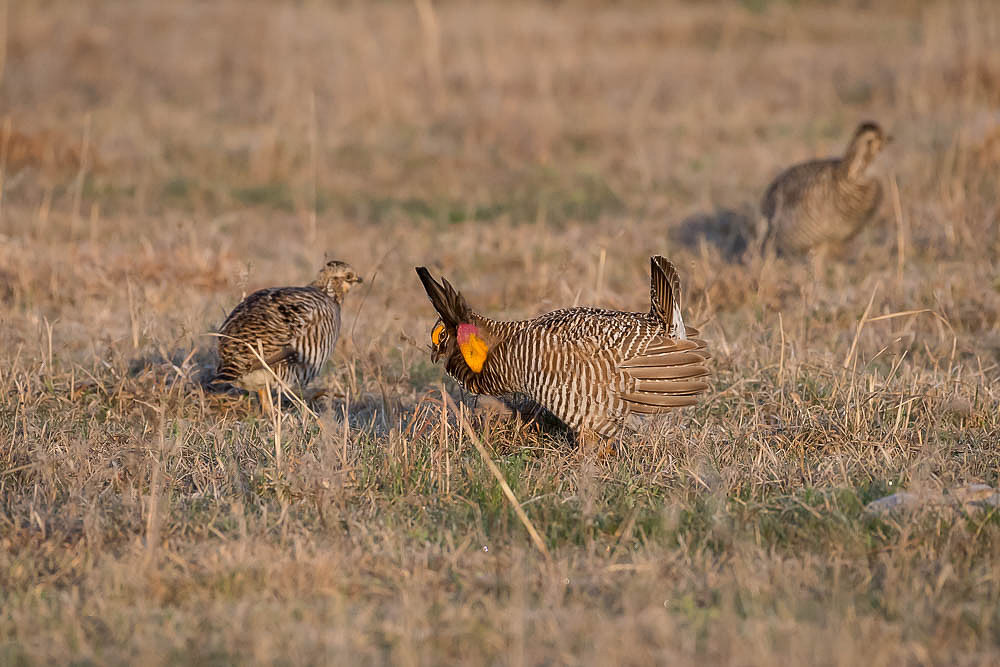
Seirer_170411_1840.jpgSeirer_170411_1840.jpgShowing His Stuff A male Greater Prairie Chicken seeks to arouse the interest of hens at a lek near Cheyenne Bottoms near Great Bend, Kan. The male's repertoire includes lifting the ear-like feathers above his head, inflating the bright orange air sacks on each side of his throat, belting out hollow moans, jumping and dancing by atamping his feet rapidly.

A male Greater Prairie Chicken seeks to arouse the interest of hens at a lek near Cheyenne Bottoms near Great Bend, Kan. The male's repertoire includes lifting the ear-like feathers above his head, inflating the bright orange air sacks on each side of his throat, belting out hollow moans, jumping, and dancing by stamping his feet rapidly.


Jumping
April 12, 2017

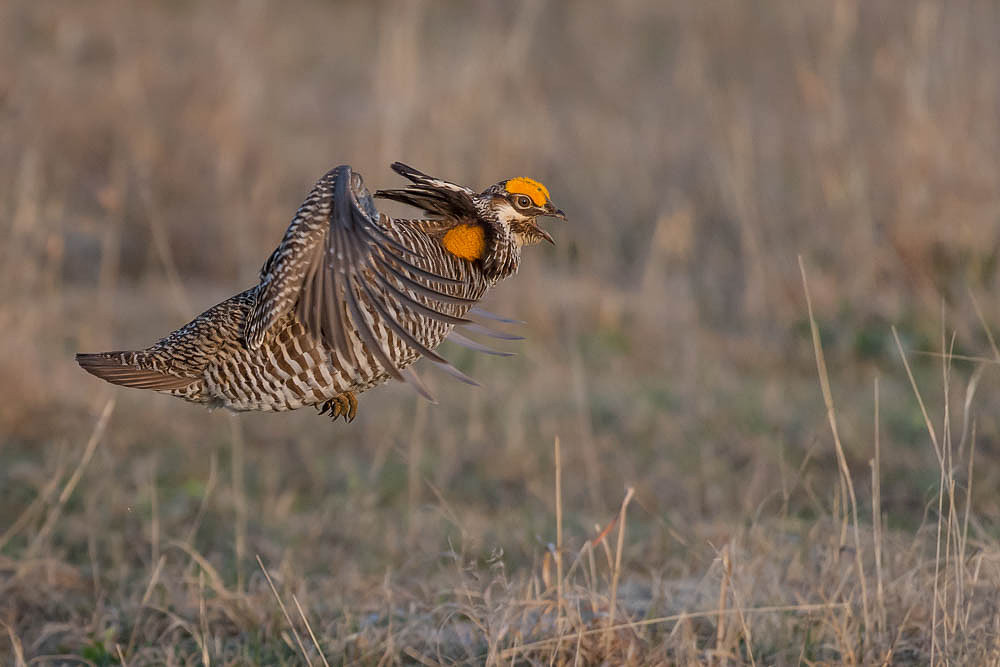
Seirer_170411_1866.jpgSeirer_170411_1866.jpgJumping Performing in hopes of finding a mate, a Greater Prairie Chicken jumps at a lek near Cheyenne Bottoms in central Kansas. The lek is a communal breeding ground where males gather to dance and sing to impress hens. As they perform, males emit a loud, hollow, eerieg moaning sound that can be heard for up to a mile.

Performing in hopes of finding a mate, a Greater Prairie Chicken jumps at a lek near Cheyenne Bottoms in central Kansas. The lek is a communal breeding ground where males gather to dance and sing to impress hens. As they perform, males emit a loud, hollow, eerieg moaning sound that can be heard for up to a mile.


Confrontation
April 11, 2017

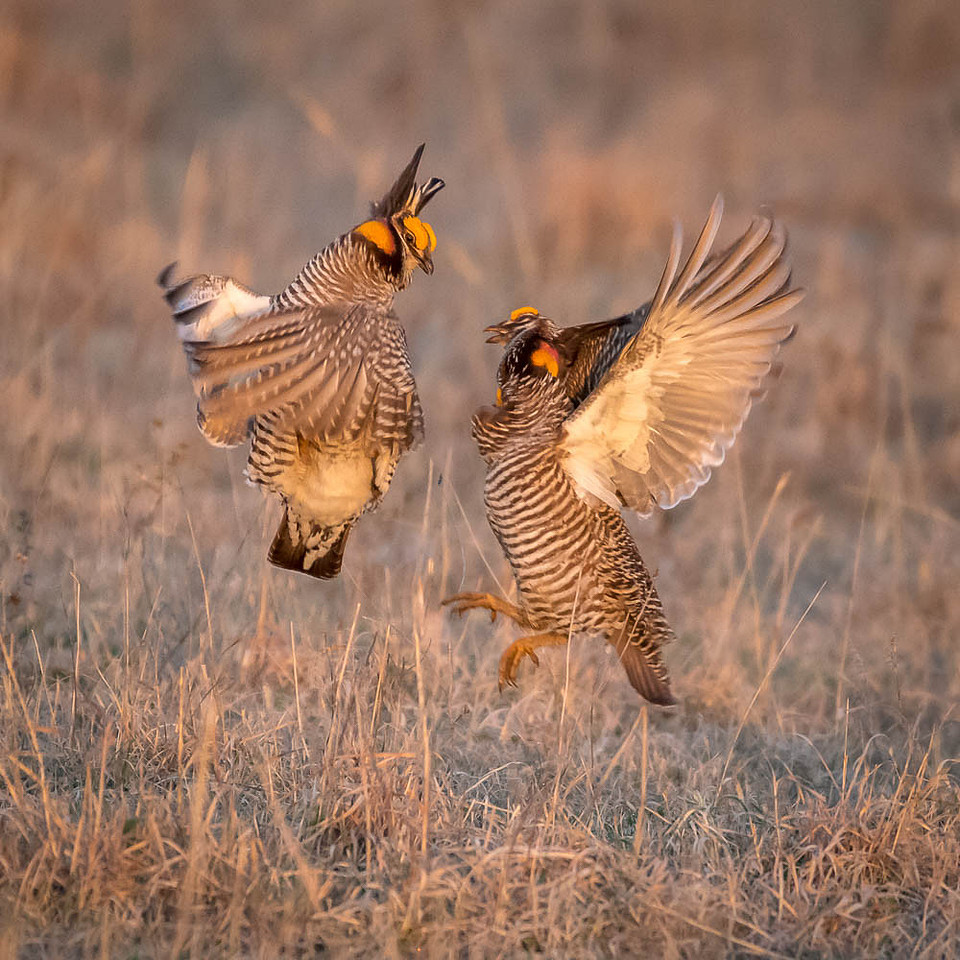
Seirer_170411_1637.jpgSeirer_170411_1637.jpgConfrontation Male Greater Prairie Chickens face-off at dawn at a lek near Cheyenne Bottoms, northeast of Great Bend. The lek is a communal mating ground where males cluck, sing, dance and fight to win the affection of hens. The hens are choosey, for nothing short of the survival of the species is at stake. Kansas research has shown that in a given season, a dominate, handsome, showy male may account for some 90 percent of the flock breeding.


Male Greater Prairie Chickens face-off at dawn at a lek near Cheyenne Bottoms, northeast of Great Bend, Kan. The lek is a communal mating ground where males cluck, sing, dance and fight to win the affection of hens. The hens are choosey, for nothing short of the survival of the species is at stake. Kansas research has shown that in a given season, a dominate, handsome, showy male may account for some 90 percent of the flock breeding.