Oui, School is Out
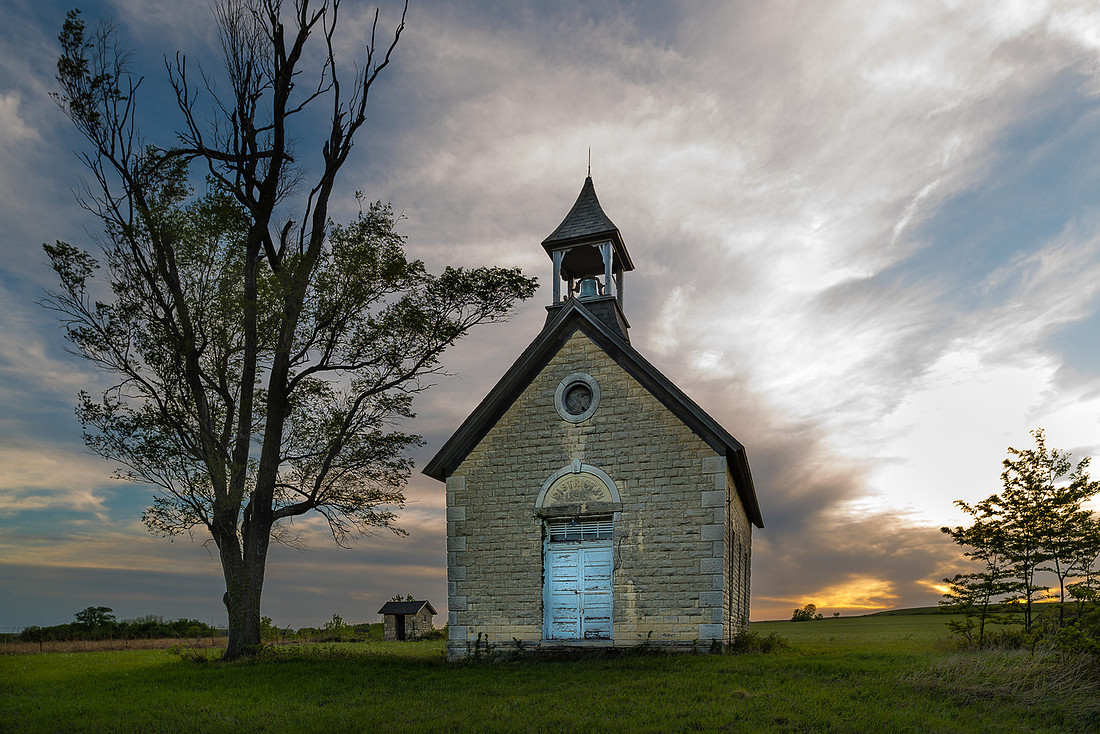

The sun sets behind the now-vacant Bichet School, built in 1896 in Marion County to serve the French-speaking families who settled near Florence. The still-solid, one-room school, closed for more than 60 years, could today be a museum had not plans been thwarted by vandals and thieves. Oscar Johnson, a local stonemason of some renown, built Bichet School, serving District 34, in 1896. The symmetrical structure with 18-inch-thick limestone walls includes a single classroom of some 1,000 square feet and is about 30 feet tall, counting the wooden bell tower. Amenities include twin outhouses, also made of stone and located on the opposite corners of the western boundary. And just in case, Johnson crafted a cave storm shelter — stone, again — featuring an arched ceiling. The first teacher (paid $40 a month) taught her lessons in English but her students all were fluent in French. Classes continued for 50 years, until April 19, 1946. The final bell rang for just two students that day – a pair of brothers, one anchoring the third grade class and the other the sixth. Since then, the building sometimes was used for community functions and for a while even served as a headquarters for local motorcycle races. Privately owned, it hasn’t been used in some time but it has earned its place on the National Register of Historic Places.
Touches of Color
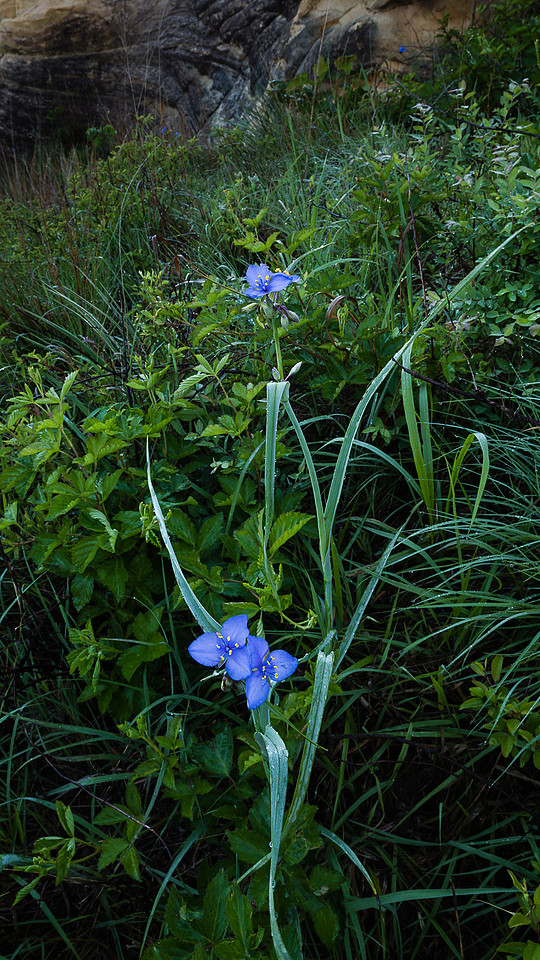
Blooming spiderwort plants, glistening from overnight rain, brighten Horsethief Canyon at the north end of Kanopolis Reservoir in Ellsworth County. The plants are common in the prairie, and their flowers are at their best in the morning. The spiderwort once was thought to be a treatment for spider bites.
Day's End
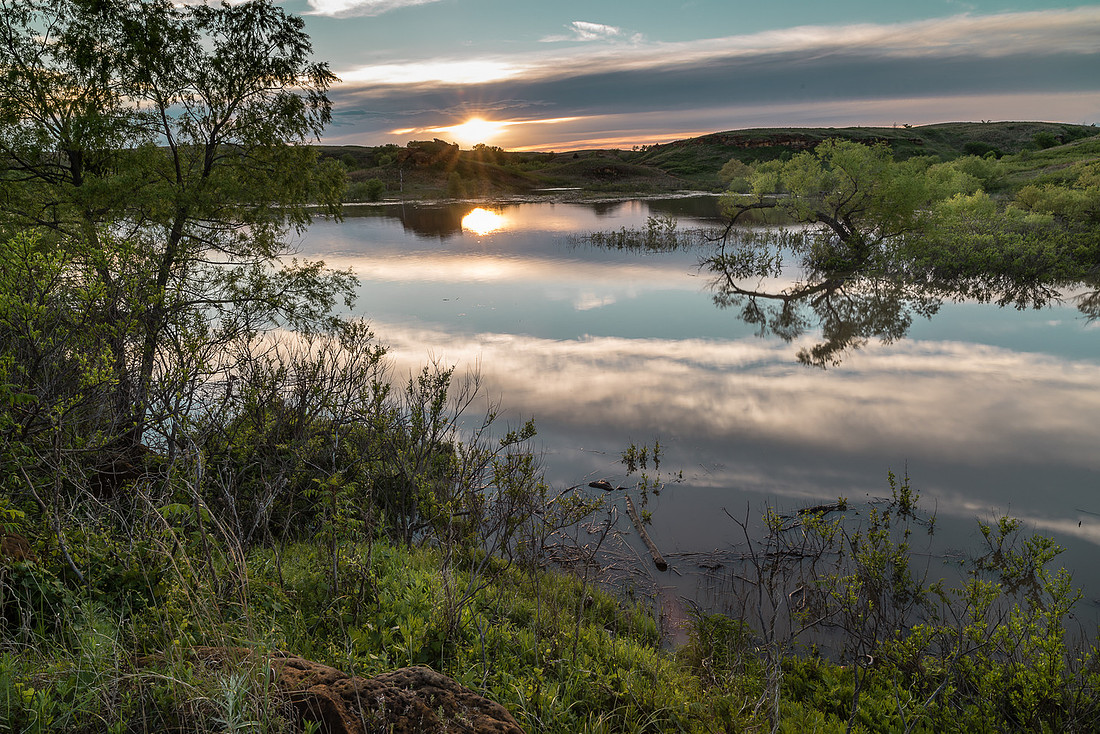
The sun sinks over the placid waters of a cove at the upper end of Kanopolis Reservoir west of Salina.
In A Spotlight
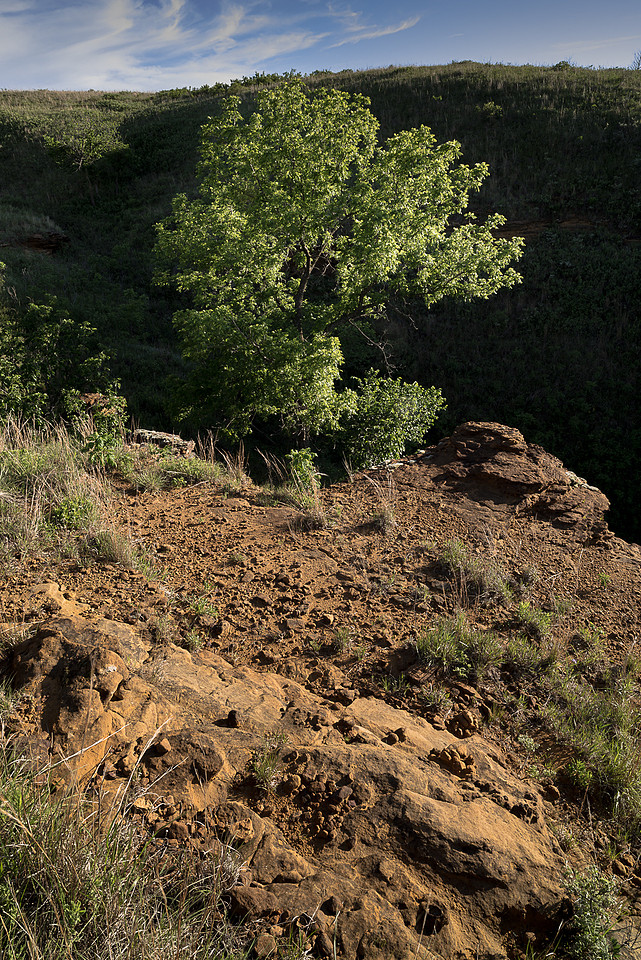
A tree sparkles as it is hit by late-evening sun that otherwise is casting deep shadows in the deep recesses of the Horsethief Canyon area of Kanopolis Reservoir in Ellsworth County. The lake is the oldest state recreation area and includes more than 27 miles of hiking trails.
Graceful, Historic Span
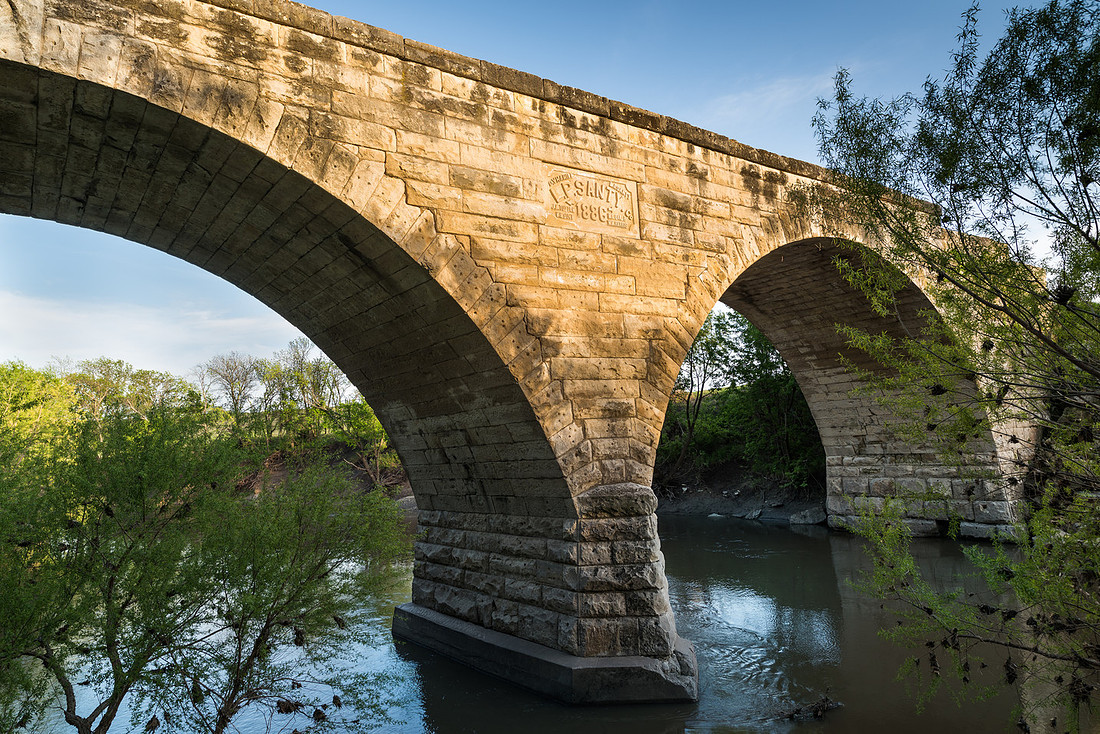
This gracefully designed limestone bridge over the Cottonwood River, with a span of about 175 feet, is the largest stone arch bridge in Kansas. Built in 1886 at a cost of about $12,000, it is also one of the oldest. The Clements Stone Arch Bridge carried traffic for more than a century before a new bridge was built on Chase County’s rerouted G Road, just to the east. Local folks say it wasn’t concern over the strength and integrity of the stone arch bridge that prompted its replacement; rather, the historic bridge, at just 16 feet wide, was deemed too narrow for modern vehicles and farm equipment.
The new bridge, utilitarian but pedestrian-looking, has left the stone arch bridge to serve only pedestrians. The road to the historic bridge is but a lane, and vehicles are barred from the span by, appropriately, huge blocks of limestone. Upon arriving, visitors seem to walk the bridge deck first, but the more interesting view is from 40 feet below, on the banks of the Cottonwood, where the stonework and craftsmanship applied by the builder, L.P. Santy & Co., of Clements, can be admired. Among the builder’s touches was the insertion of a large block, carved in relieve, that identifies the Santy Company, its owners, the commissioners and the date of construction.
The bridge is just south of Clements, less than a mile from busy U.S. 50 Highway. A highway sign calls attention to the bridge, which since 1976 has been listed on the National Register of Historic Places. Local fundraising efforts have helped secure the structure and prepare it for visitors, and the hope is that more can be done to restore and develop the site as a local tourist attraction.
Weathering, But Gracefully
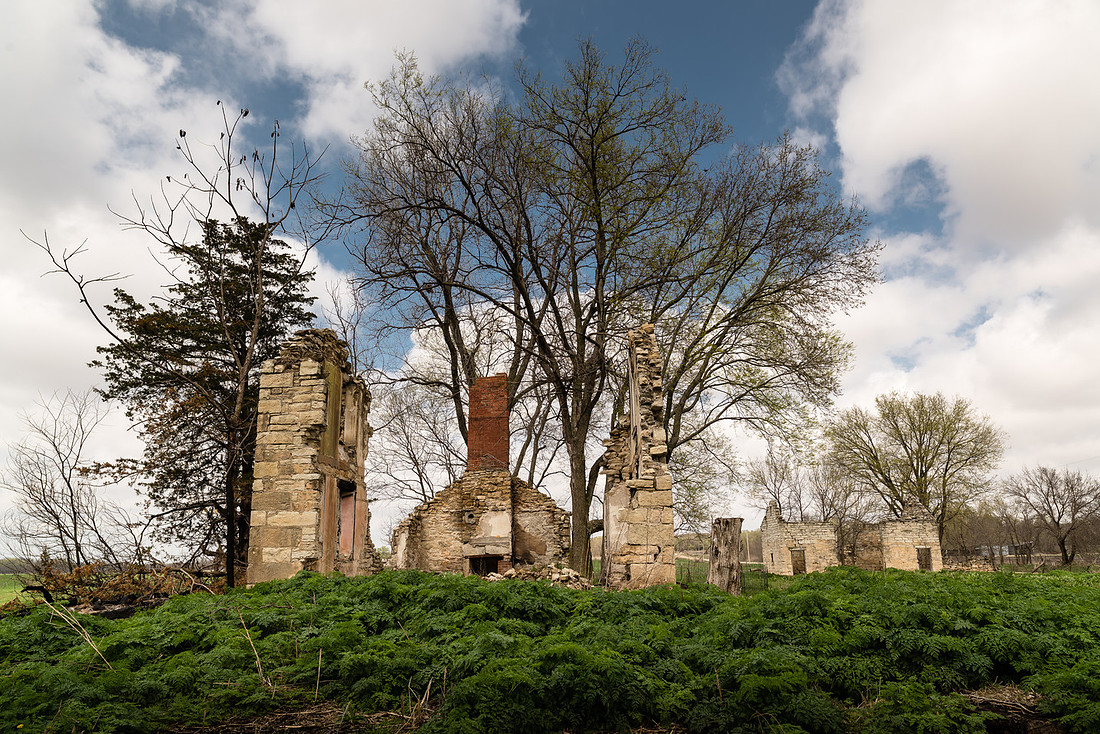
A formerly imposing two-story limestone building has become a ruins in Morris County, just south of Diamond Springs and just up the hill from Diamond Creek.
Eye On Downtown
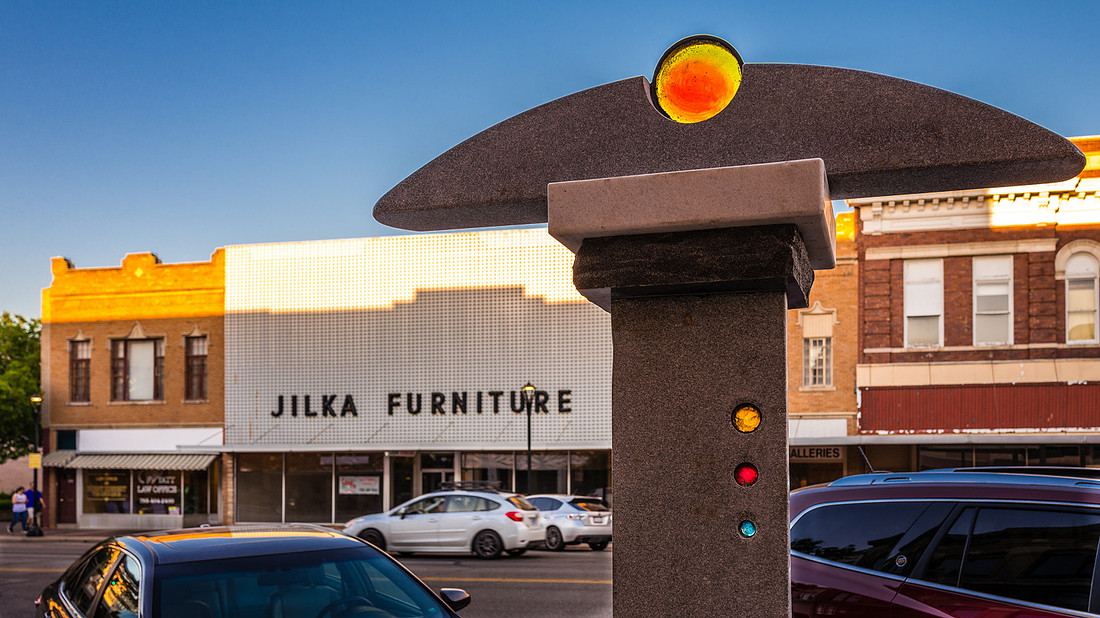
A sculpture titled "Amber Eye" keeps watch on downtown Salina as part of the annual SculptureTour Salina, which opened in early May. The show includes 22 pieces that will be on display for nearly a year. Participants of the walking tour will vote on a "People's Choice" winner at year's end, and that piece will be purchased for permanent public display by the City of Salina. "Amber Eye," priced at $12,000, was created by Glenn Zweygardt, who works at Alfred Station, NY. A former university art professor in New York, he was born in 1943 in far northwest Kansas, at St. Francis, and earned a bachelor's degree in art at Wichita State University and a master's degree at the Maryland Institute College of Art, Baltimore.
Woodsman, Teacher
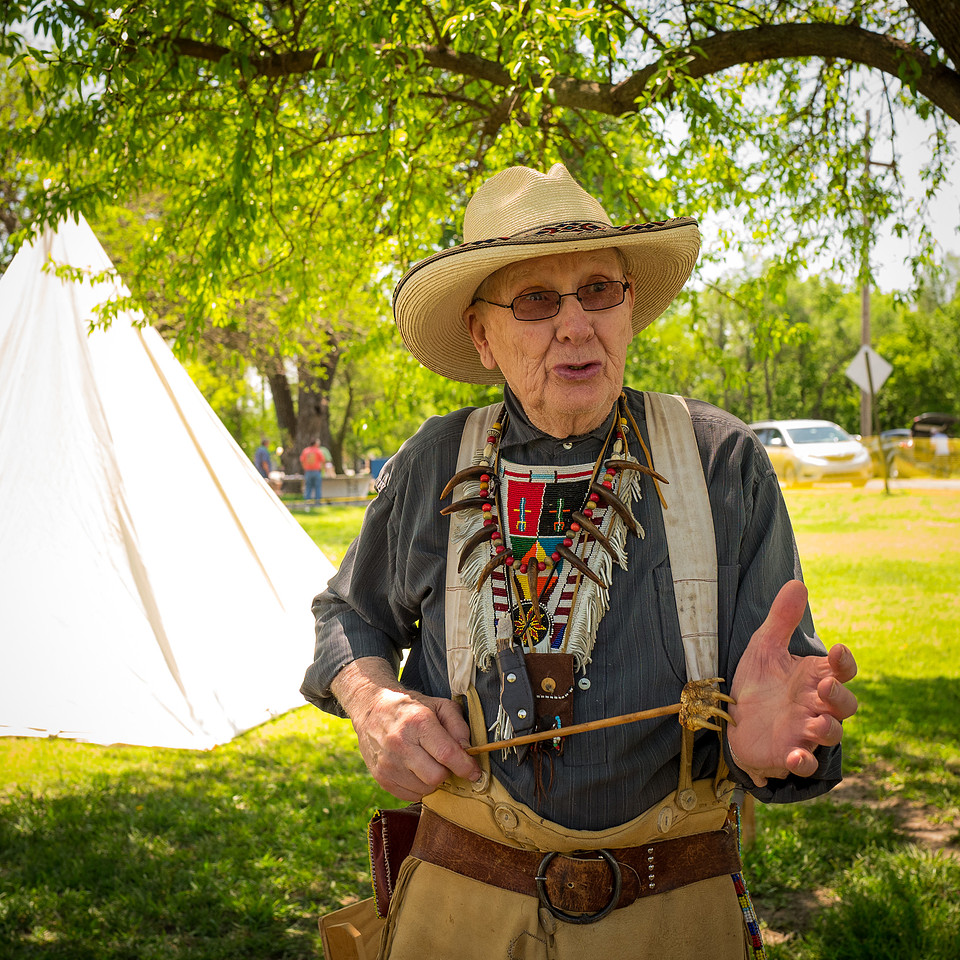
Dressed for the part in clothes of his own making, Jimmie Lewis tells of the life of a Northeast woodsman in the early 1700s during the Discover Salina Naturally event in Lakewood Park. Lewis is part of the Salina-based Prairie Longrifles group that, through study and re-enactment, keeps alive the frontier lifestyle of woodsman, sometimes referred to as mountain men. The club had an exhibit at Discover Salina Naturally, which was focused on nature, the environment and natural lifestyle choices. Lewis, 85, Salina, long has been studying history, the resourcefulness of mountain men, the development of the Plains, and historic Indian culture that made wise use of natural resources. He is a well-known storyteller and in 2014 was honored with the Kansas Museum Association's Distinguished Service Award for his work in teaching and demonstrating history as a volunteer for the Smoky Hill Museum, Salina.
Rhino on Watch
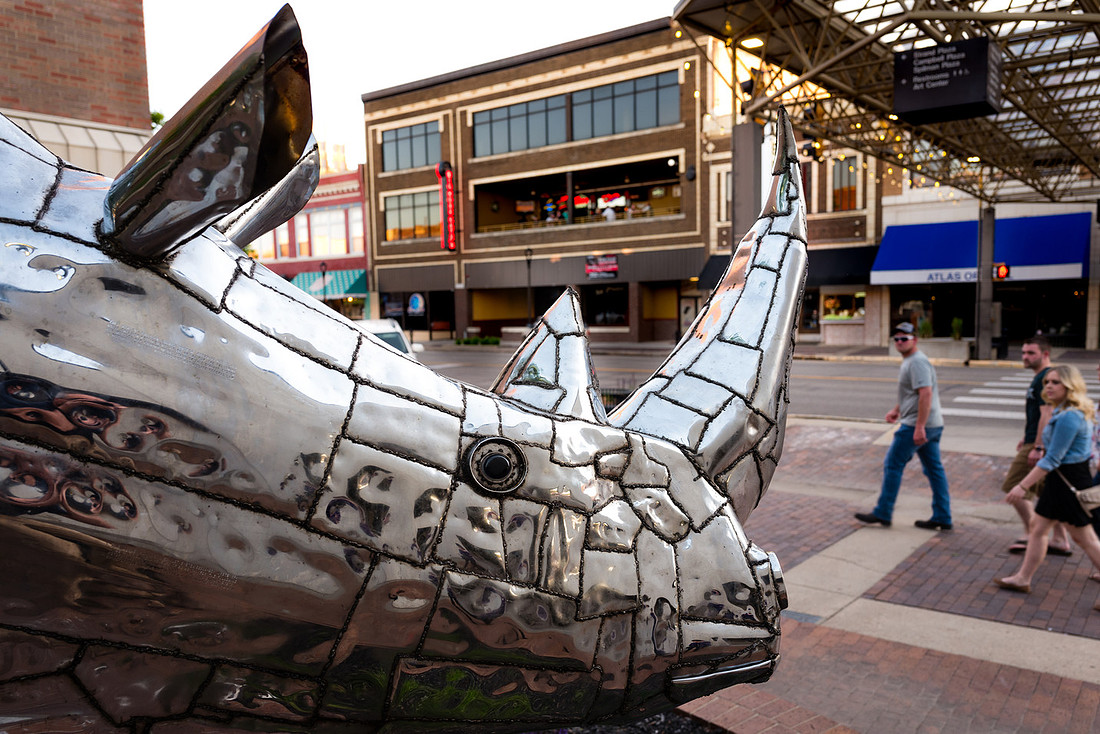
“Harley,” a metal sculpture of considerable size that resembles a rhinoceros, keeps a careful watch on downtown Salina traffic. The artwork is one of 22 street sculptures installed on Santa Fe Avenue as part of the SculptureTour Salina public art walk and competition. The pieces will be displayed for nearly a year, and voting by the public will name a People’s Choice award winner that will be purchased by the City of Salina. “Harley’s” creator, Dale Lewis of Hastings, Minn., won that award last year with a metal sculpture of an elephant named “Slim.” That piece has moved to permanent display; "Slim" looks out over the chain link fence of the former city swimming pool in Kenwood Park. Also on permanent display throughout the city are five previous People’s Choice winners and more than a dozen sculptures purchased for public display by donors. “Harley,” made of scrap metal that includes tailpipes and mufflers from Harley-Davidson motorcycles, carries a price tag: $18,000.
New Grazing Season

Cattle look for fresh spring growth in the tallgrass prairie of the Flint Hills west of Matfield Green.
New Dream For Old Mill
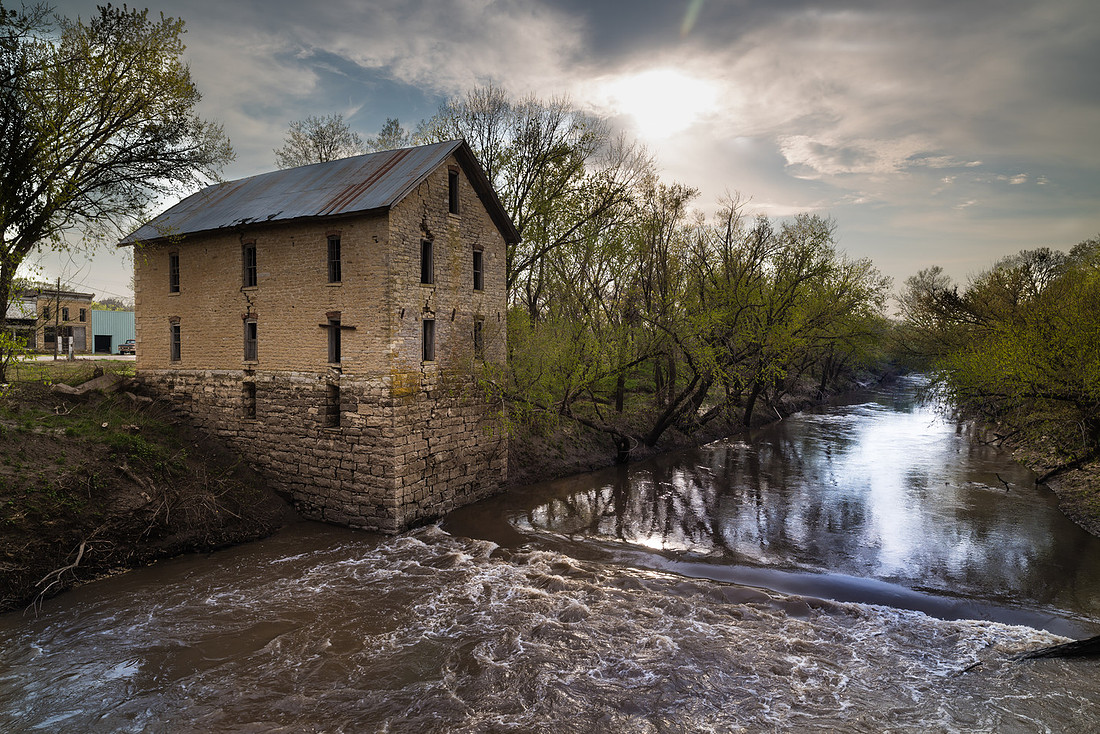
Even with cracks in the walls, mud in the basement and deteriorating timbers, a 142-year-old gristmill at Cedar Point, out of service for years, stands as a monument to ingenuity, frontier architecture and pluck. Little wonder it’s the target of a restoration project, estimated to cost some $3 million.
The Drinkwater and Shriver Mill was built on the south bank of the Cottonwood River at Cedar Point, beginning in 1871. That was just before the railroad arrived so the builders, O.H. Drinkwater and P.P. Schriver, needed to draw on creativity to get building materials and equipment to the remote Chase County site. When the mill was finished in 1875, the river’s current provided the power to drive the pulleys and belts that carried wheat harvested in the surrounding river bottomland to the top of the building, where the seed was separated, diverted to wooden chutes and allowed to flow, by gravity, back to ground level for milling, with a stone grinder, into flour. The flour was bagged and sold to the growing population in the valley.
Dan Clothier, a Kansas City property developer who has ties to central Kansas, is leading the restoration effort, driven by a love of history, architecture and the Flint Hills. He notes that the mill was one of the first built in Kansas; within a quarter of a century more than 500 mills were counted in the state. His dream is to preserve the limestone building so it can house a museum to showcase its charms and tell the story of Kansas frontier development and early-day milling.
Some work has been done. The site has been cleaned, and a 1903 wood-and-tin addition to the mill has been removed, revealing a handsome limestone façade that surprised all of the Cedar Point residents — only a couple of dozen or so at last count. That façade fronts and is a key element of the town’s remaining business district.
In the 1920s, the mill and river team could grind about 250 bushels of wheat in 12 hours. In the Dust Bowl days of the 1930s, the river went dry for a while. In the 1940s, the mill’s work was to mill feed for cattle, and after the war the mill relied on electricity instead of the river for its power. All operations ceased in the 1960s and the mill languished until Clothier began work to bring it back to life in an educational role. He formed a nonprofit organization, the Drinkwater and Schriver Mill Inc., and serves as its president. That organization has bought the property. Since then, the mill has been added to the National Register of Historic Places and a team of architectural students at Kansas State University has come up with a concept for restoration, though that work won’t begin until funds are raised.
This is a long-term project, Clothier said. But so be it. The building is stable for now and he’s long been known for optimism. Regional publications have been attracted to the story and the mill, with Cedar Point being less than a mile south of busy U.S. Highway 50, draws a steady stream of visitors. A large sign at the mill explains the project and directs people to the nonprofit organization’s web site, www.cedarpointmill.com, and to Clothier, who fields calls from his Leawood home, (816) 808-1610.
On The Road Again
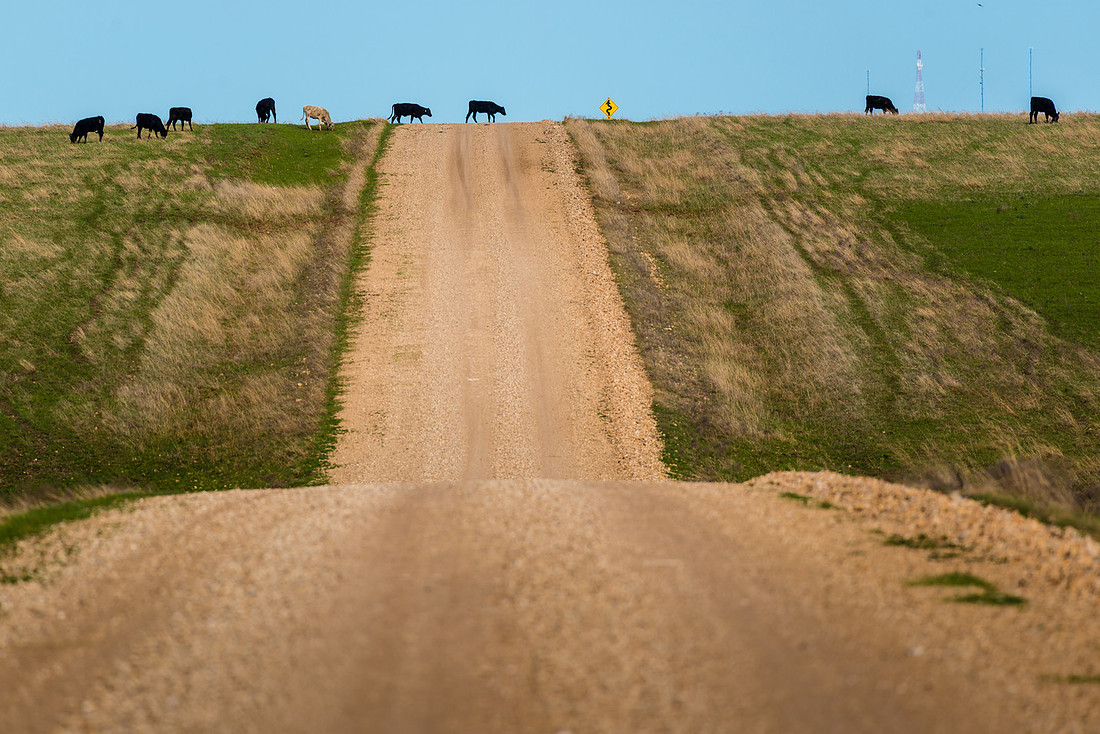
Seeing, perhaps, greener grass, cattle wander across aptly named Open Range Road west of Matfield Green in the Kansas Flint Hills. The road passes through an "open range," meaning that the few roads that dare intrude in the vast acreage of tallgrass prairie lack the protection that fences typically provide both travelers and livestock. Or, to put it plainly, cattle have the right of way here. This is their space. Motorists know to be mindful that cattle might claim their space in the trafficway. Never mind that traffic tends to be light.